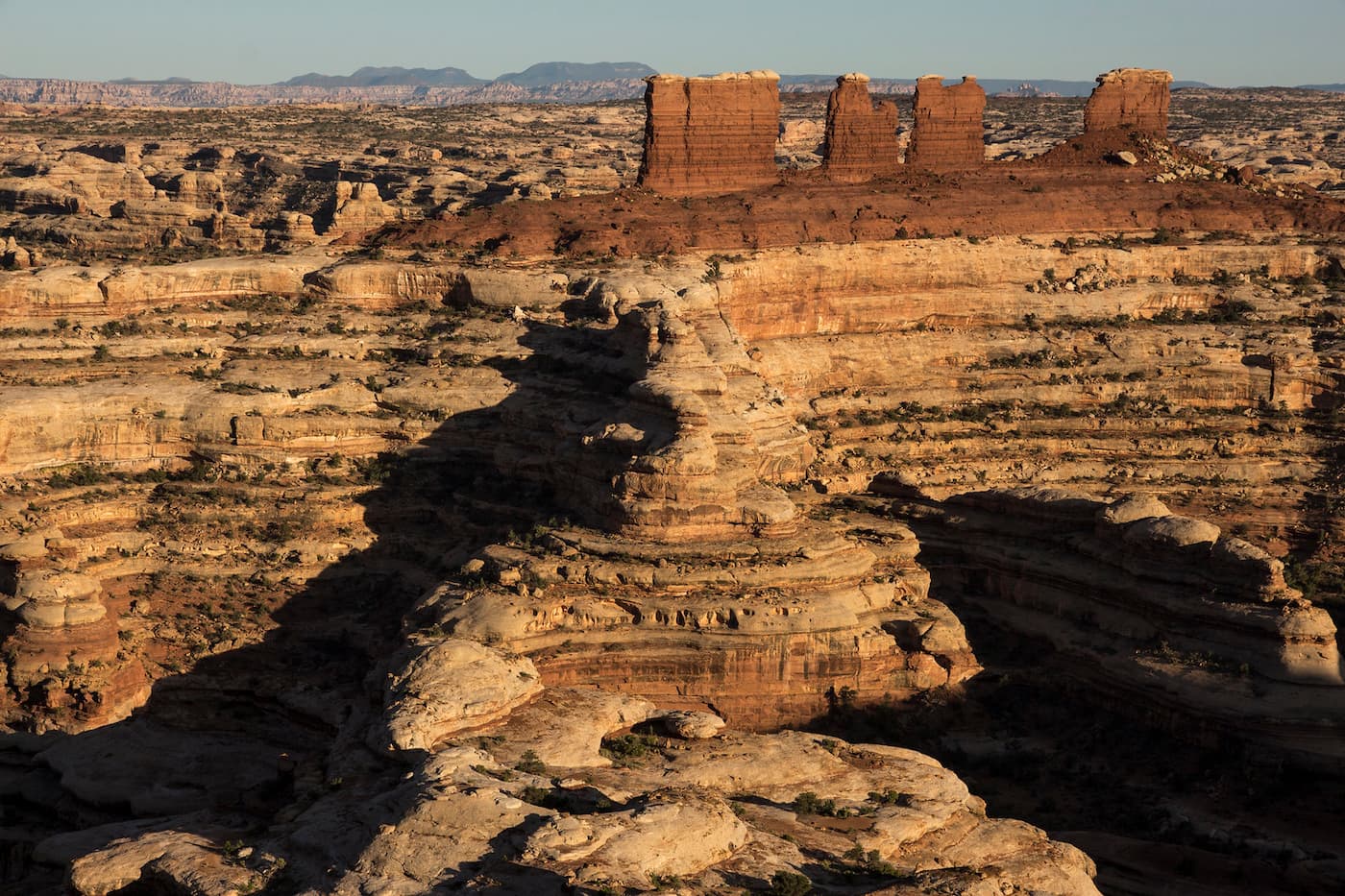
In a forgotten corner of southeastern Utah lies one of North America’s most remote and breathtaking landscapes. The Maze, part of the vast Canyonlands National Park, is not merely a place—it is a test, a riddle, and a sacred monument carved by time. Its name is no poetic metaphor. This is, quite literally, a natural labyrinth so intricate, so unyielding, that even seasoned wilderness experts approach it with caution—and sometimes fear.
The National Park Service doesn’t mince words: “Do not enter unless you are experienced and prepared.” This is no exaggeration. The Maze is vast and disorienting, and once you’re inside, help is not just far away—it’s nearly unreachable.
From above, The Maze looks like a giant’s fingerprint etched into the desert floor. From within, the sensation is surreal: sandstone walls tower on all sides, and trails—if they can be called that—vanish into tight curves, blind turns, and stone corridors sculpted by millennia of erosion. Each step offers discovery and the very real possibility of disorientation.
Reaching The Maze is no simple feat. It demands hours of rough off-road driving, often through sand, boulders, and technical terrain, only possible with high-clearance, modified 4×4 vehicles. Many visitors pair the drive with multi-day treks, carrying everything they need—especially water.
There are no ranger stations here, no signs, no amenities. Just rock, sky, and a silence so complete that it feels sentient. For those who seek pure wilderness and detachment from the modern world, this is one of the last frontiers.
Beyond its stark grandeur, The Maze is also home to one of North America’s most mysterious cultural sites: the Great Gallery, a series of haunting pictographs that continue to puzzle archaeologists. The elongated, faceless humanoid figures—painted thousands of years ago—seem to float on the canyon walls with eerie stillness. Their exact meaning is unknown, but their very presence here, in such a remote location, suggests a timeless truth: this land has always drawn the curious, the spiritual, the searching.
There is no sound in The Maze but the wind and your own breath. No signs, no crowds, no direction but your own. It’s not a place for casual hiking—it’s for those willing to be humbled by scale, lost in time, and shaped by solitude.
Spending a night here, beneath stars so sharp they seem to hum, is not just a camping trip—it’s a rite of passage. Your body adjusts to the land’s rhythm. Your mind quiets. Your soul listens.
In a nation of scenic lookouts and well-paved trails, The Maze defiantly remains wild. There are no shortcuts, no quick snapshots. What it offers is earned slowly, sometimes painfully, but always meaningfully. And for those who venture in—and make it out—the reward is a memory that doesn’t fade.
Because some places aren’t meant to be conquered. They are meant to be visited, respected, and left exactly as they are: vast, quiet, and gloriously unknowable.