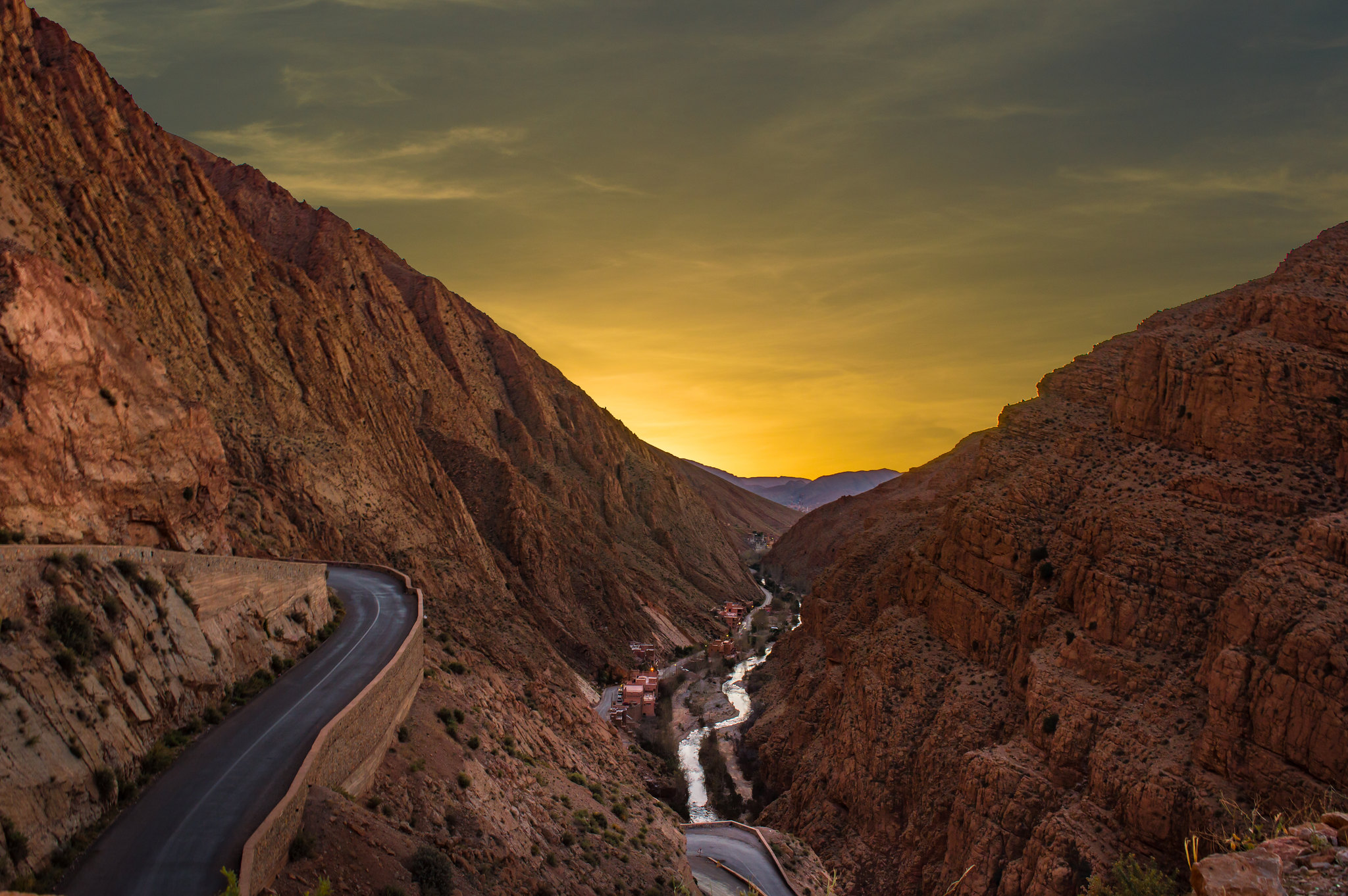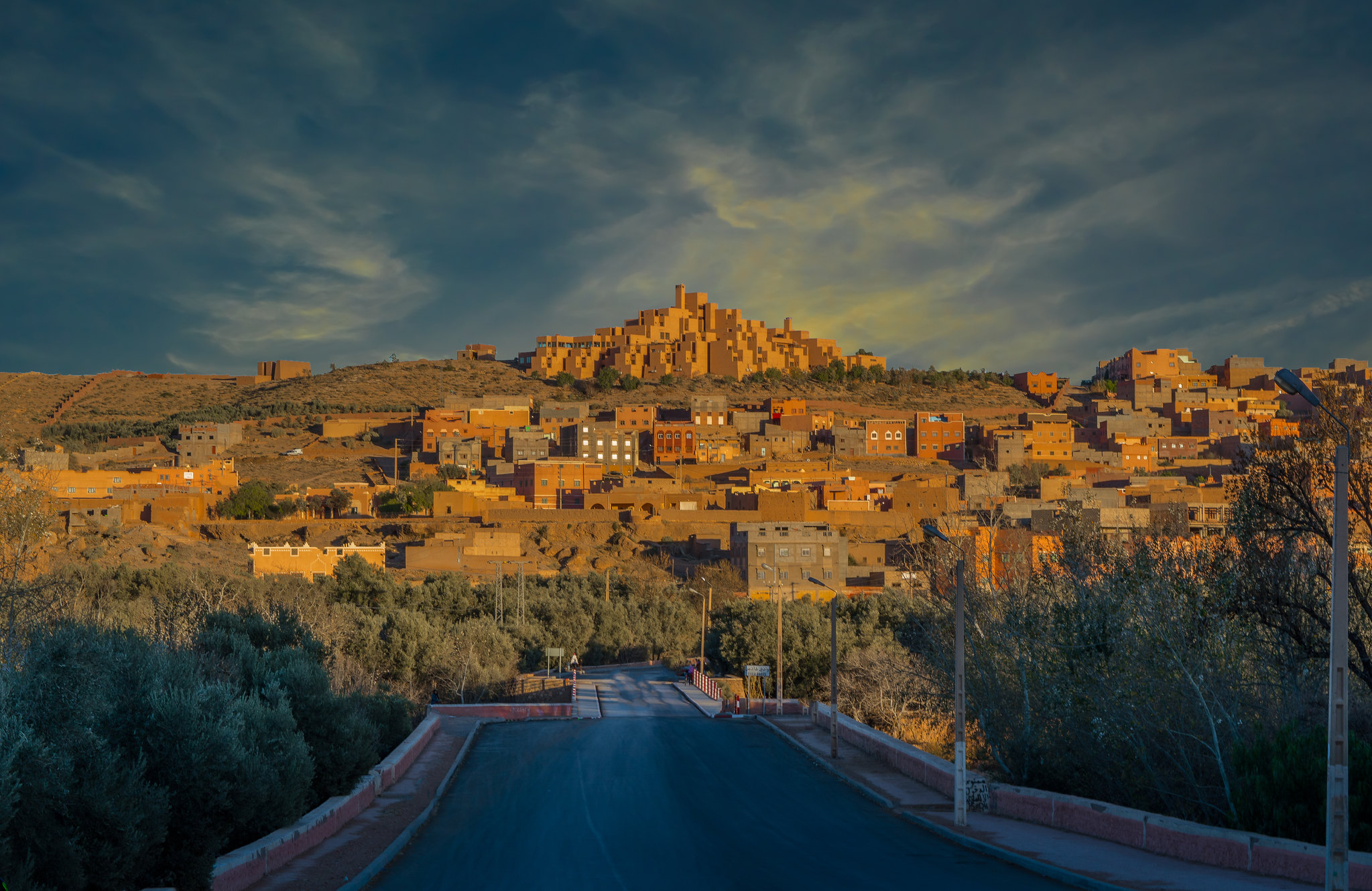
In the remote heart of the Moroccan High Atlas, deep within a valley sculpted by time and water, lies Khemis Dades. This small village is much more than a dot on the map between Boumalne Dadès and M’semrir; it is the epicenter of a dreamlike landscape and a millennial tradition. Here, the deep Dadès Valley reveals itself in all its majesty, with steep gorges of intense blood-red color that seem to glow under the setting sun, creating an almost sacred backdrop for the life that persists in this untamed corner of Morocco.
Venturing into the Dadès Valley is to embark on a route of astonishing contrasts. Green strips of palm groves and almond trees cling to the banks of the Dadès River, nourished by its vital waters, while on both sides, arid, reddish mountains rise, sculpted by the wind over millennia. These monumental Dadès Gorges are a paradise for Morocco hiking, inviting explorers and adventurers to get lost in their canyons, where the echo of the river and the silence of the rocks compose an ancestral melody.
But the true pulse of Khemis Dades is felt every Thursday. The very name of the village, “Khemis,” meaning “Thursday” in Arabic, is a tribute to the weekly event that transforms it into a mystical market Morocco. The Thursday souk is not just a place of bartering and trade; it is a space where ancient energies and traditional knowledge of Berber culture converge. Here, amidst the bustling dates, spices, and textiles, an almost ethereal dimension unfolds:
- Berber healers: With knowledge passed down orally through generations, these healers combine the power of local plants with ancient healing practices, blending Amazigh rituals with popular Islam. They offer their services with a wisdom that feels as old as the mountains that surround them.
- Ritual plants: Stalls display herbs and roots such as harmal (Syrian rue) or artemisia, plants with supposed purifying or protective powers, whose use in incense or infusions dates back to pre-Islamic times.
- Amulets and talismans: Local blacksmiths and artisans forge silver amulets, often with Berber symbols (Tifinagh) representing protection, fertility, or spiritual strength, connecting their wearers to the desert’s mystique.
- Magical stones: Some stones from the valley are believed to hold “baraka” (spiritual force), and vendors offer them as bearers of good luck or protection.
Beyond the esoteric, the Thursday souk is a showcase of ancient art and Berber tradition. Here you’ll find Berber rugs, unique pieces woven by women of the region with tribal symbols that narrate ancient stories and myths. Old copper and ceramic utensils, demonstrating the survival of a functional art always linked to daily life, are also abundant. And often, music and oral poetry find their place, with nomadic musicians playing the rabab or singing stories that date back to time immemorial.
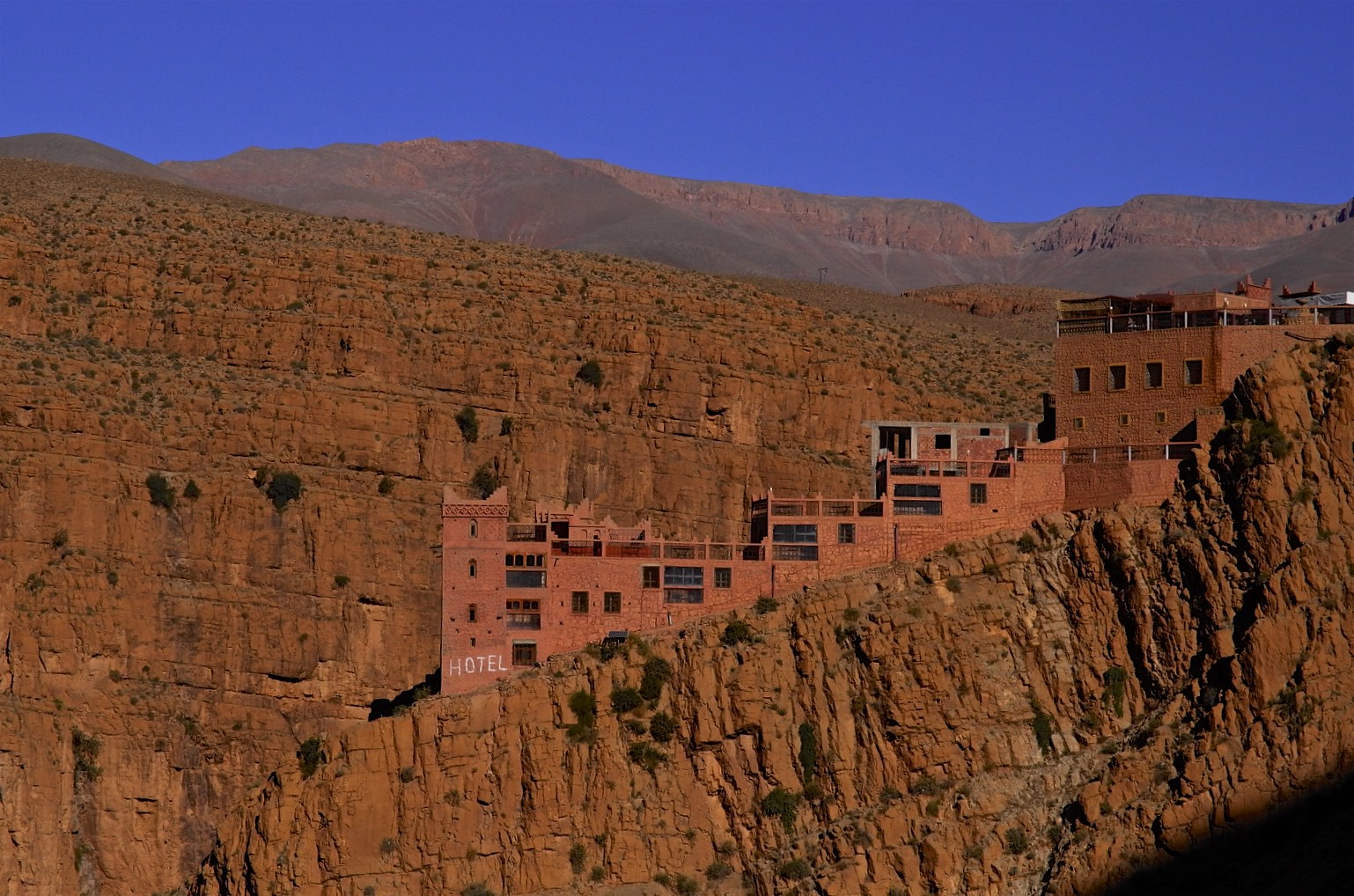
For the traveler, venturing to Khemis Dades is to enjoy an authentic Morocco experience, less touristy than the more conventional routes of Marrakech or Fes. It is a journey to the essential, a deep immersion into the rural and traditional life of the High Atlas. In addition to the fascinating market experience, popular activities include mystical hiking through the gorges, where the blood-red cliffs and the sun’s shadows create an almost spiritual atmosphere. Staying in historical kasbahs converted into guesthouses offers an unparalleled opportunity to immerse oneself in Berber life and discover culinary rituals and hospitality that touches the soul.
Visiting Khemis Dades is more than just a trip; it is an encounter with the essence of Berber culture and a reminder of the unwavering strength of nature and tradition. Between the red of the mountains and the murmur of the Dadès waters, every Thursday the market comes alive like an ancestral heartbeat, where the sacred and the everyday meet in a millennial dance.