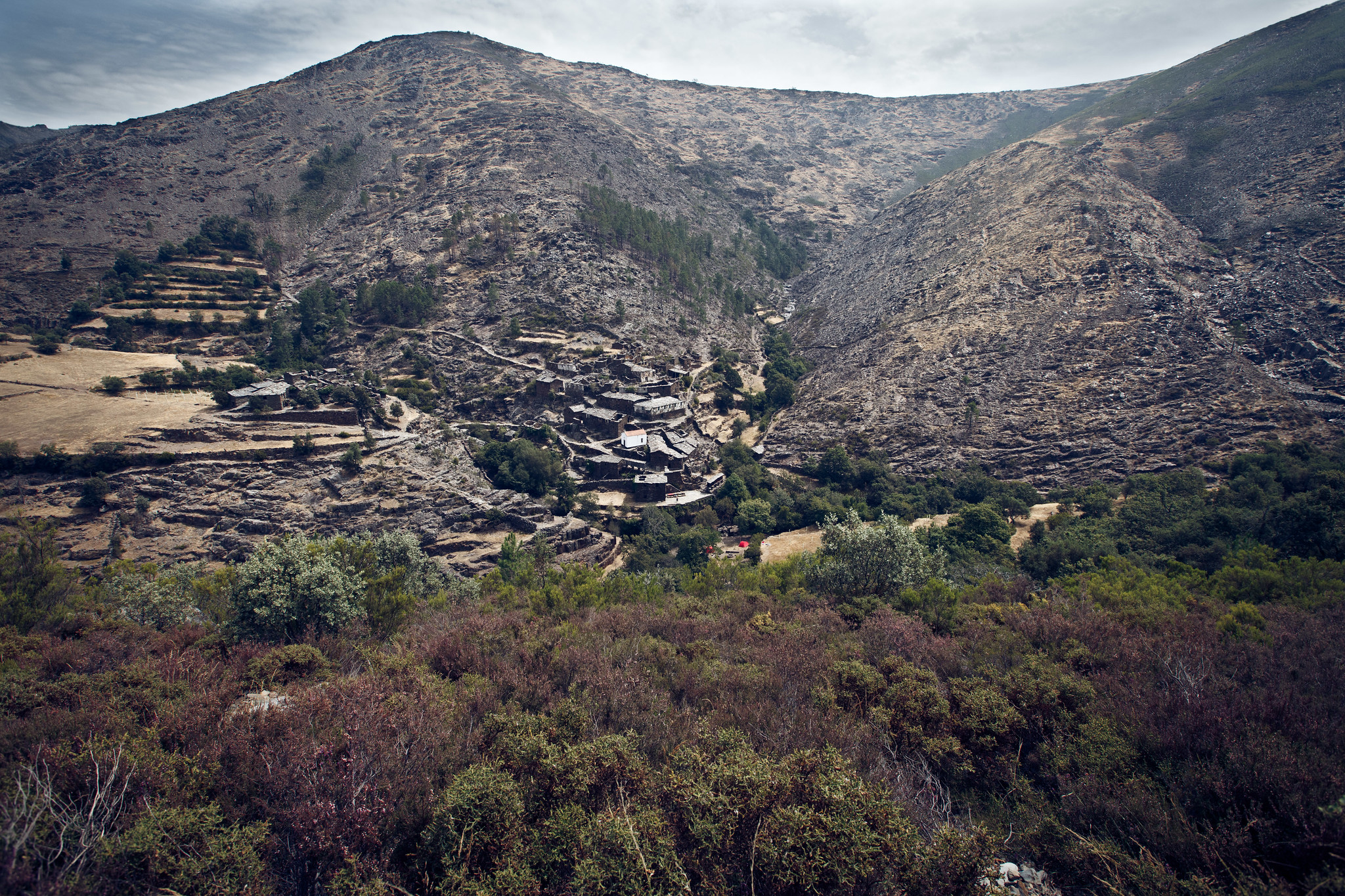
Nestled in the wild heart of the Arouca massif, the Aldeia de Drave Portugal stands as a silence frozen in time. Here, the echo of modern life completely fades away. This abandoned stone village, accessible only on foot after a demanding but rewarding hike, offers a unique experience: that of having crossed an invisible threshold into another century. Leaving the noise of the asphalt behind for the ancient drovers’ path is the first step toward an adventure where solitude, nature, and history intertwine poetically.
The Gralheira Massif, with its imposing mountains and deep valleys, protects Drave from the outside world. It is a place where the stone houses, now stripped of their slate roofs, merge with the landscape. The orchards, once carefully tended, have been invaded by wild flowers that add touches of color to the gray patina of history. A small stream, the Rio Paiva, runs through the valley; its constant murmur is the only melody that breaks the immensity of the silence. The feeling upon arrival is one of awe and respect: Drave is not just a ruin, but the unchangeable witness of a life that departed without haste, leaving its essence intact.
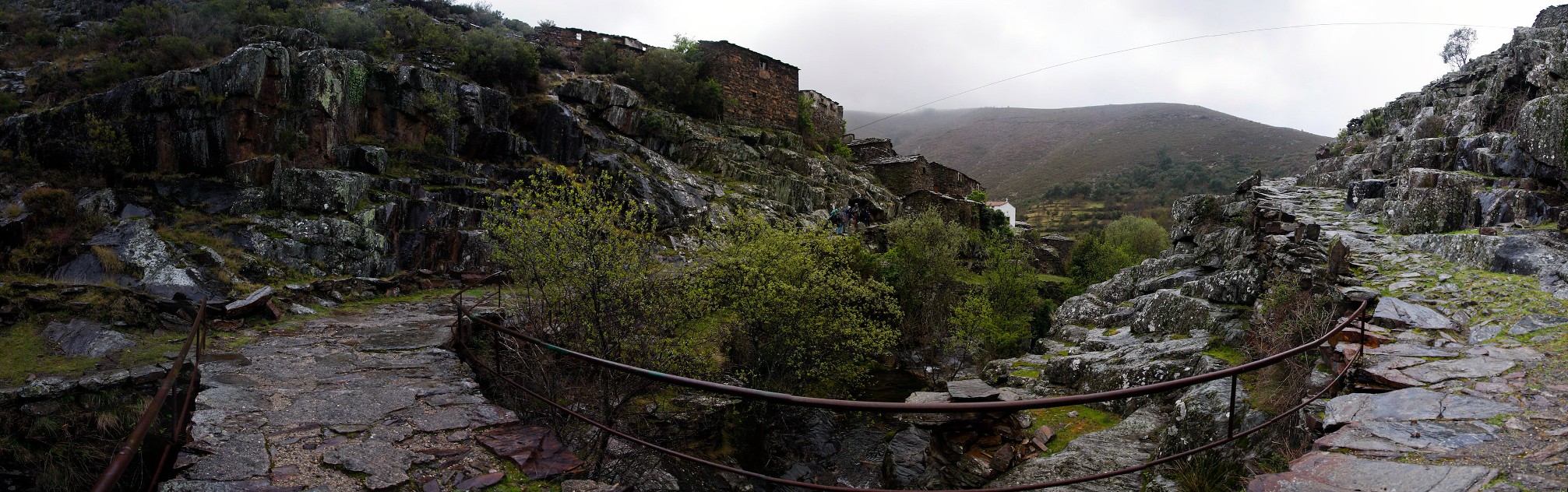
The access route to this abandoned village in Arouca is part of the adventure itself. The trail, an ancient drovers’ path, winds along the slopes of the massif, offering spectacular views of canyons and native forests. It is a journey that demands patience and proper footwear, but rewards every effort. It is not uncommon to find other adventurers, nature explorers, and photographers seeking the magic of a place that forces you to be present. The isolation and difficult access are, without a doubt, the guardians of Drave’s authenticity.
The stories surrounding Drave add a veil of mysticism to the place. It is said that its former inhabitants, shepherds and farmers, lived in almost total self-sufficiency, connected to the land in a way that seems distant today. Local legends whisper of mystical encounters and the protection of the mountain guardians, stories passed down through generations that add special meaning to every stone and every corner. For many, Drave is more than a destination; it is a sacred place for introspection, a sanctuary of solitude that revitalizes the spirit.
Although the village is uninhabited, there is a curious presence: Drave was adopted by a group of scouts who, in 1993, restored some structures for their use, keeping the community spirit of the place alive. This singular rehabilitation initiative has ensured that the soul of the stone village is not completely lost. It is an example of responsible tourism, a tacit commitment between the past and the present to honor the memory of this place.
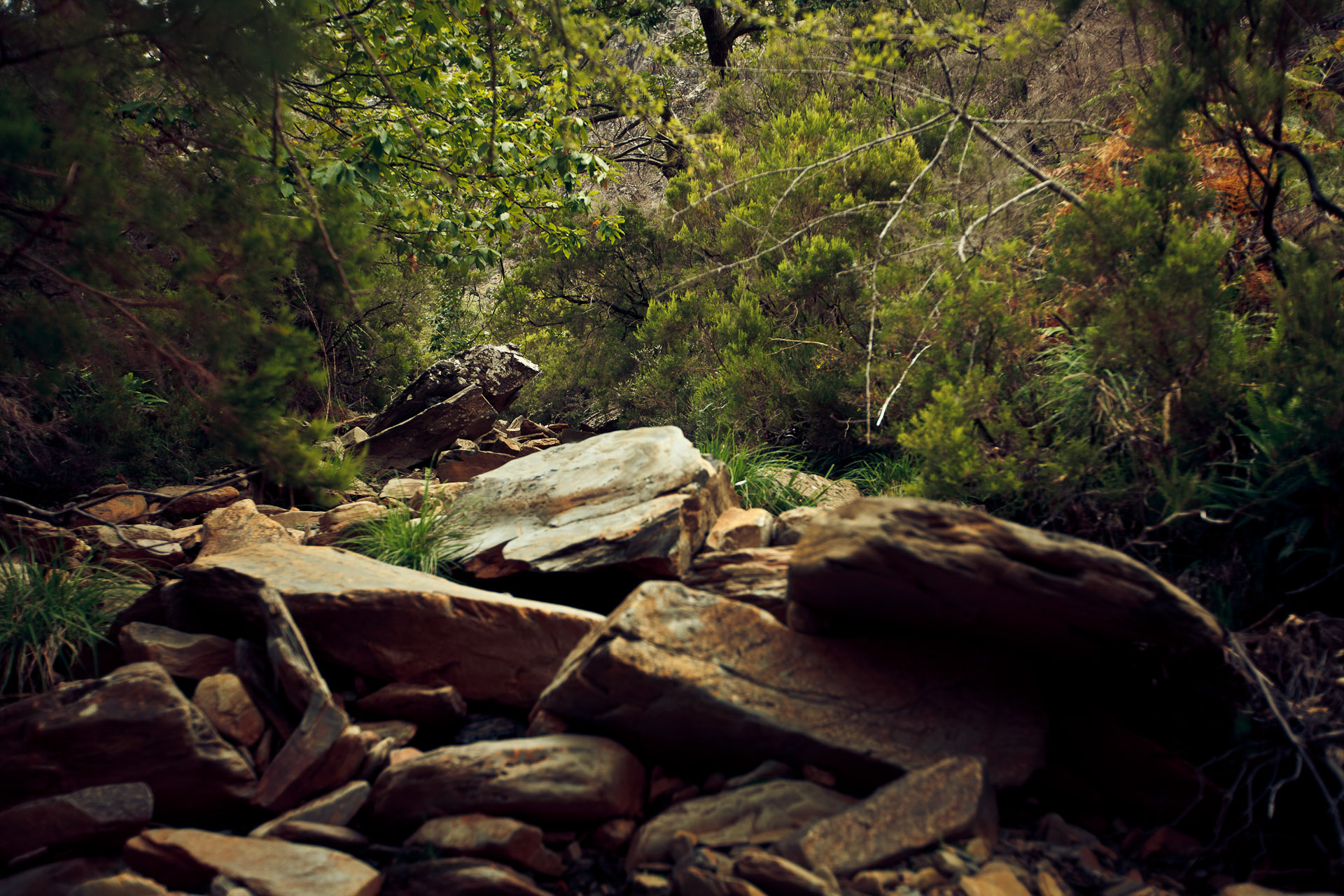
For the traveler who dares to explore, the experience is profoundly personal. The smell of damp earth and the fresh aroma of the pine forest, the rough touch of the slate walls, the taste of pure water from the stream… each sensation connects you to the essence of this corner of the world. The best time to go is in spring or autumn, when temperatures are mild and the landscape is dressed in vibrant green or golden tones. Good footwear, water, and a camera are essential to capture the beauty of a place that invites us to leave our worries behind.
In summary, the Aldeia de Drave Portugal is not just a destination, but a journey into a parallel dimension where time stands still and silence speaks. It is a reminder of the beauty of simplicity and the strength of nature. Drave is a call to adventure for those who seek total disconnection and a reconnection with history, a hidden gem in the Arouca massif waiting to be discovered by those who dare to walk.