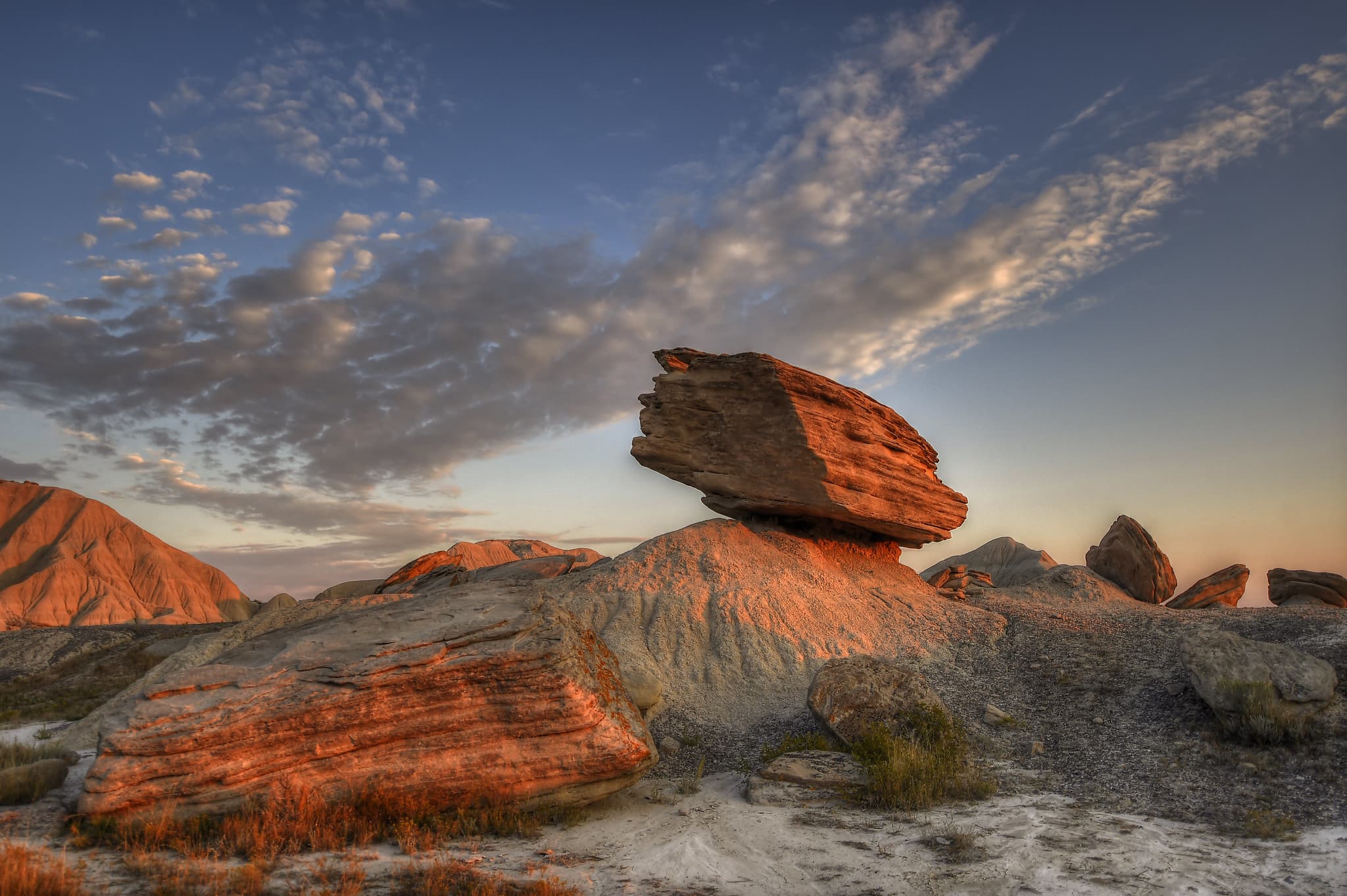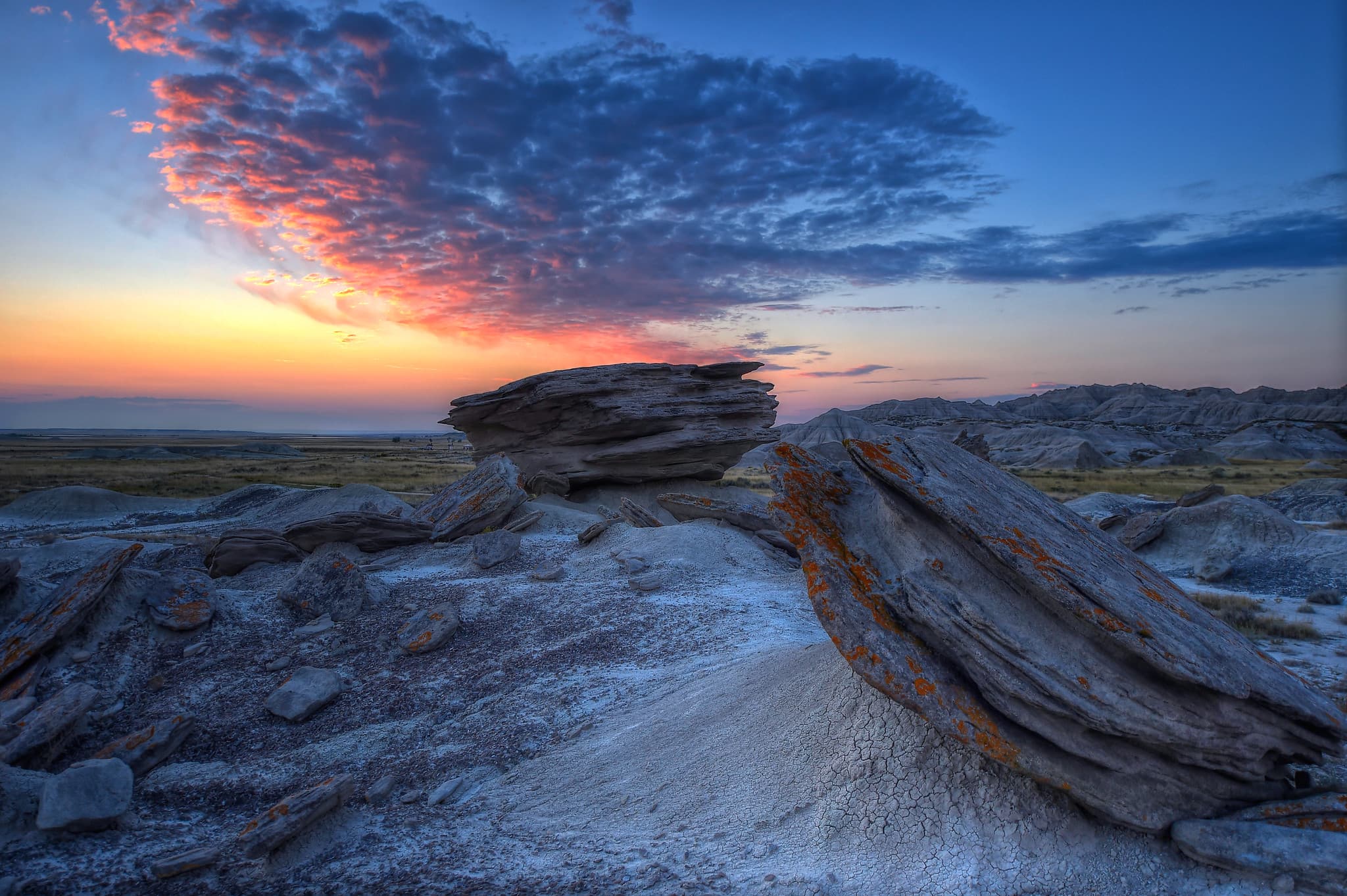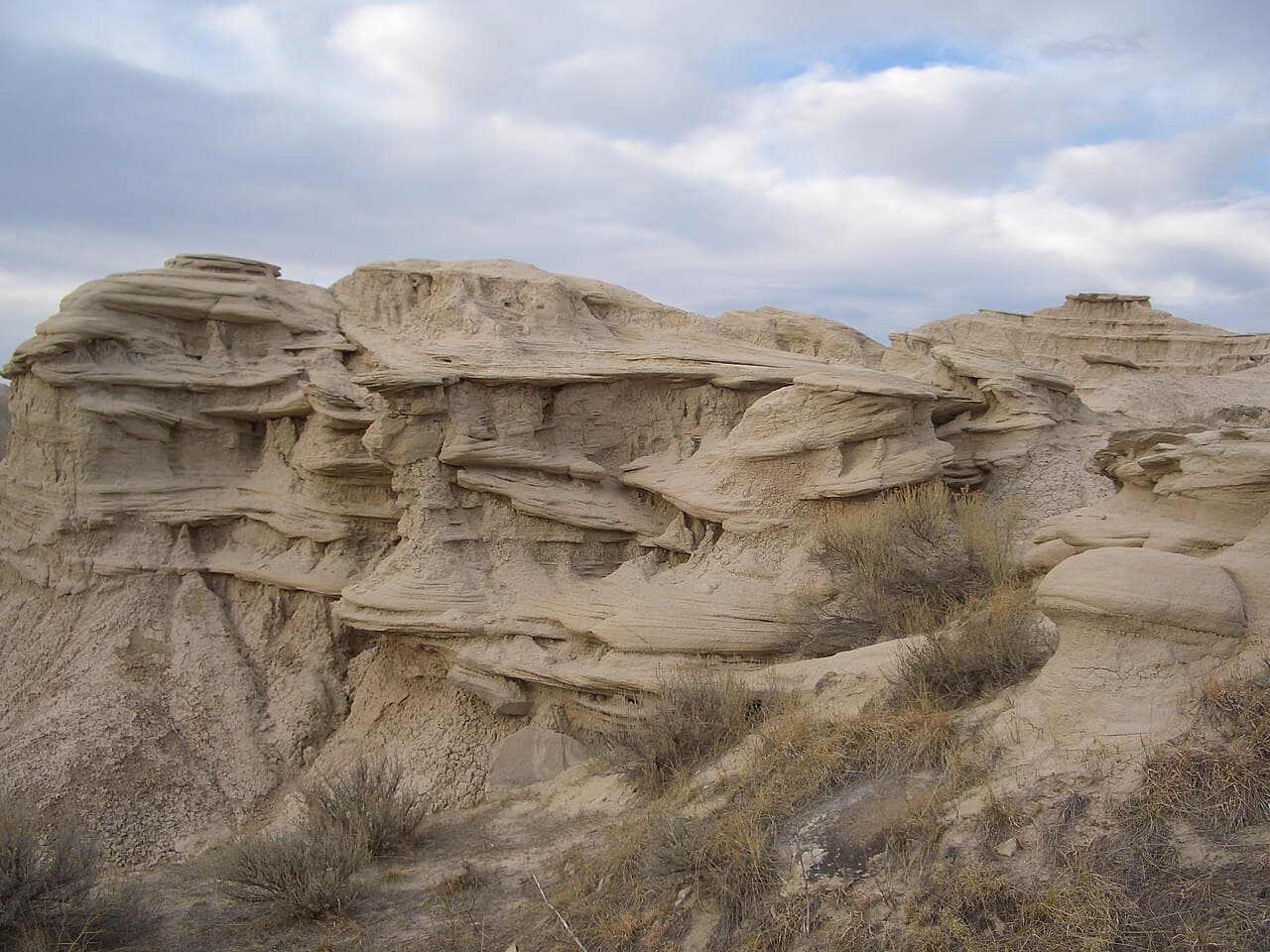
In the remote northwest corner of Nebraska, the expansive prairies surrender to a seemingly lunar landscape. In this unique setting lies Toadstool Geologic Park, a fascinating destination. Nestled within the Oglala National Grassland, this hidden gem reveals millions of years of geological history. It also uncovers paleontological history. These are carved into surreal rock formations. The area is scattered with fossilized remnants of an ancient world.
The park’s unique rock structures, shaped like giant mushrooms, are the result of millions of years of differential erosion. The clay and sandstone layers date back to the Eocene and Oligocene epochs—approximately 38 to 24 million years ago. These bizarre formations not only define the park’s name, Toadstool Geologic Park, but also serve as time capsules preserving fossils of long-extinct species. Among the many discoveries are remains of massive tortoises, early rhinoceroses, three-toed horses, saber-toothed cats, and primitive camels.
A fossil trackway over a kilometer long is one of the park’s most extraordinary features. It depicts the chase of prehistoric rhinos by entelodonts—ominously nicknamed “hell pigs.” These fossils tell us about past life forms. They also reveal their interactions, movement, and ecosystems, making Toadstool Geologic Park a walk through time.
Toadstool Geologic Park offers several hiking options for different levels of experience. A short 1-mile interpretive loop takes visitors through the most iconic formations. It passes fossil sites with informative signage that brings the ancient world to life. More seasoned hikers can venture onto the 3-mile Bison Trail. This trail connects to the Hudson-Meng Bison Kill Site. The site is an active archaeological dig revealing the mass death of bison thousands of years ago. For those seeking even greater solitude, the Great Plains Trail traverses the surrounding grasslands and badlands.
Adding a cultural layer to the natural spectacle of Toadstool Geologic Park, the area also features a sod house replica. These humble yet ingenious dwellings were once home to 19th-century settlers who braved the harsh prairie conditions. The exhibit offers insight into human resilience. It highlights adaptation that echoes the survival stories etched into the rocks around it.
The park is open year-round and includes a primitive campground without water. Visitors should bring ample supplies, especially to Toadstool Geologic Park. It is important to have enough water. Summer temperatures can be extreme. The area is also subject to sudden weather changes. Access is via gravel roads. These roads can become impassable after rain. This adds to the sense of isolation and adventure that defines the park.
Despite its remoteness, Toadstool Geologic Park captivates those who find it. The silence of the prairie is palpable. The drama of the rock formations is striking. An invisible presence of ancient beasts underfoot adds mystery. Together, these elements create an experience that is as humbling as it is unforgettable. It’s not just a park—it’s a portal to a lost world etched into the cliffs and clay of Nebraska.