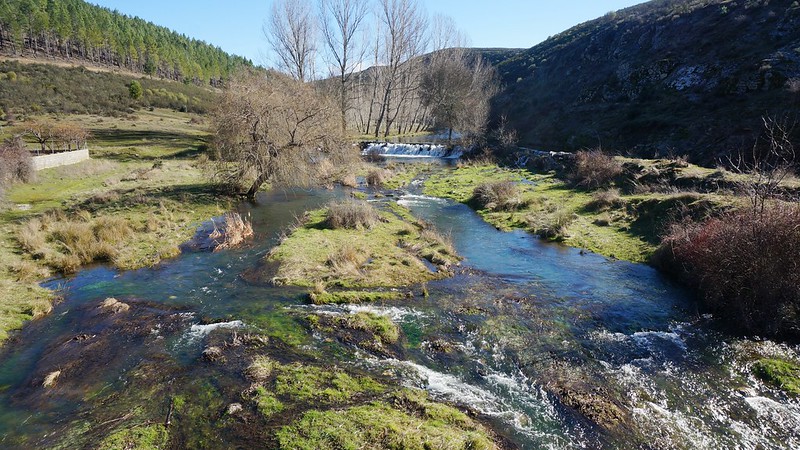
In the northwest of Zamora, where the border with Portugal draws a horizon of gentle mountains, lies one of the most unique and wild enclaves of the Iberian Peninsula: the Sierra de la Culebra. Its name, evoking mystery and winding paths, honors both its geographical shape and the enigmatic character of its infinite forests, a vast territory where time seems to slow down and crowds are a distant echo. Here, it is possible to spend days immersed in pristine nature Spain without encountering a soul, sharing the landscape with its most emblematic inhabitant: the Iberian Wolf Zamora.
The Sierra de la Culebra is, in fact, the place with the highest density of Canis lupus signatus in Western Europe. It is not just a refuge, but a true sanctuary where the wolf has been traditionally protected, becoming an intrinsic part of the landscape’s identity. Its presence here is no accident; it is the result of conservation policies and a complex coexistence with human communities. For travelers seeking an authentic connection with wild fauna, the Sierra de la Culebra offers the unique opportunity for wolf spotting in the wild, with specialized guides who ensure ethical and respectful observation. The wolf, in this sierra, is a symbol of resilience, ecological balance, and, at times, a source of heated debate between shepherds and conservationists.
Despite not being a mountain range of imposing altitudes (its maximum elevation is around 1,200 m), the Sierra de la Culebra is a mosaic of landscapes of incalculable value. Its Zamora forests are a melting pot of oak, holm oak, and pine groves, interspersed with a dense Mediterranean scrubland of heather, rockrose, and gorse. Hidden lakes, winding streams, and peat bog areas contribute to an exceptional Culebra biodiversity. This natural richness is due to its strategic position as a bioclimatic transition zone between the Castilian plateau and the ecosystems of northern Portugal. In addition to the wolf, the sierra is home to abundant fauna including roe deer, red deer, wild boar, and majestic raptors such as the golden eagle, griffon vulture, and Egyptian vulture, making every hike a potential observation adventure.
The cultural landscape of the Sierra de la Culebra is as moving as its nature. Villages like Villardeciervos, Flechas, or Ferreras de Abajo, witnesses of the massive rural exodus of the 20th century, barely retain a few inhabitants. However, this silent depopulation has allowed for the preservation of their traditional stone and slate architecture, and the persistence of living traditions: pagan-rooted festivals, the ancestral mushroom gathering, or transhumant pasturing. These strongholds offer the opportunity for authentic rural tourism Castile and Leon, and indeed, sustainable repopulation projects and ecotourism Castile and Leon focused on wildlife observation and the valorization of ethnographic heritage have emerged.
Like many “secluded” mountain ranges, the Sierra de la Culebra is rich in Zamora legends and popular myths. Tales speak of snake guardians of hidden gold in caves, of healers who used the wisdom of low-lying mountain plants, and of white wolves that guide lost travelers or protect children. Even some of its rock formations have been given names of power and symbolism, such as “The Devil’s Throne,” “The Queen’s Chair,” or “The Passage of Death,” inviting the imagination to soar.
Located between the regions of Sanabria, Carballeda, and Aliste, in the northwest of Zamora, the Sierra de la Culebra is accessible in approximately 2 hours by car from the provincial capital. It is an ideal destination for low-impact hiking Sierra de la Culebra, cycle tourism, and, above all, for immersing oneself in a profound silence, far from the noise of the world. It is a place where the wild fauna of the Iberian Wolf Zamora, remarkable biodiversity, and villages frozen in time merge into a unique and moving experience. A true hidden treasure of Spain.