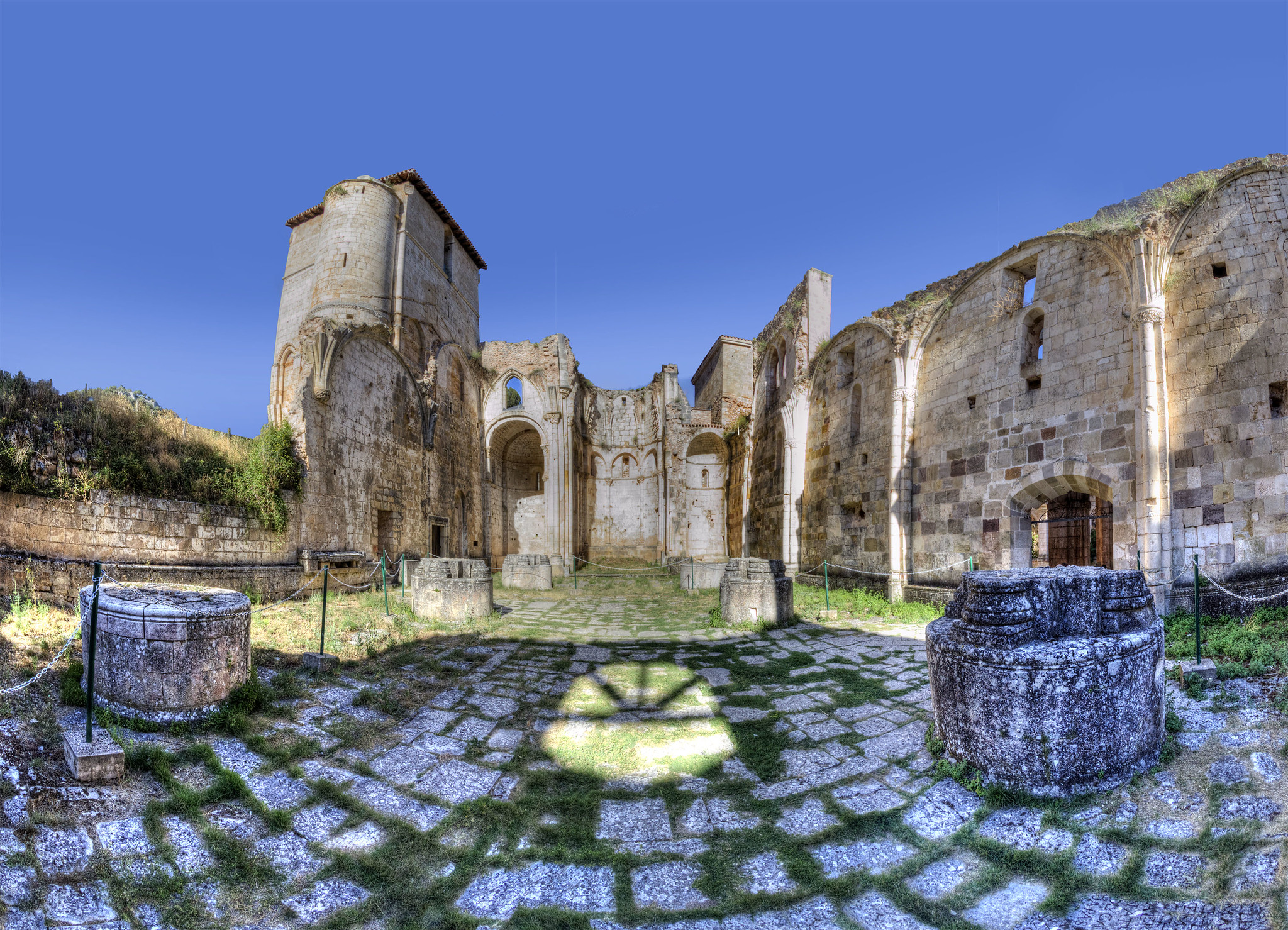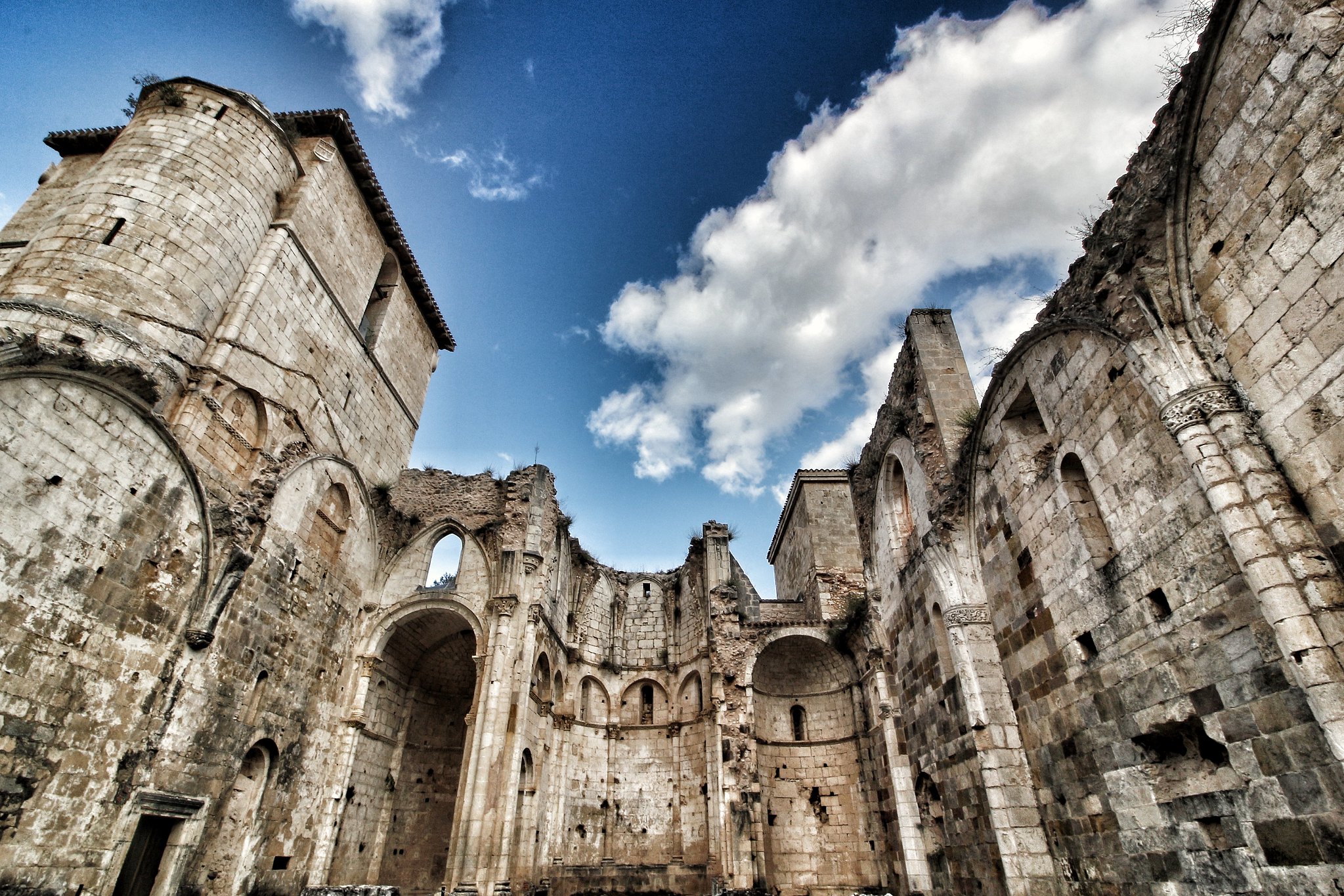
Nestled in the heart of the Sierra de la Demanda, province of Burgos, stand the evocative ruins of the Monastery of San Pedro de Arlanza. This ancient monastery, now covered by a mantle of moss that attests to the relentless passage of time, emerges from the lushness of the forest as a silent witness to an ancient and powerful history. Accessing this place via a secondary road that winds through the mountains is already an invitation to disconnect from the modern world and enter a realm where nature and medieval architecture merge in an atmosphere of contemplative exploration. San Pedro de Arlanza is not a mass tourism destination, but its ancestral vibe and its decaying beauty attract those seeking a deep connection with the past and the serenity of the natural environment.
Founded in the 10th century, the Monastery of San Pedro de Arlanza was one of the most influential monastic centers in the Iberian Peninsula during the Middle Ages. Its importance extended both religiously, politically, and culturally, becoming a pantheon for Castilian kings and nobles. The medieval history of this monastery is intrinsically linked to the early counts of Castile and the consolidation of the kingdom. However, after centuries of splendor, the monastery declined, suffering pillage and abandonment that led to its current state of historic ruins.
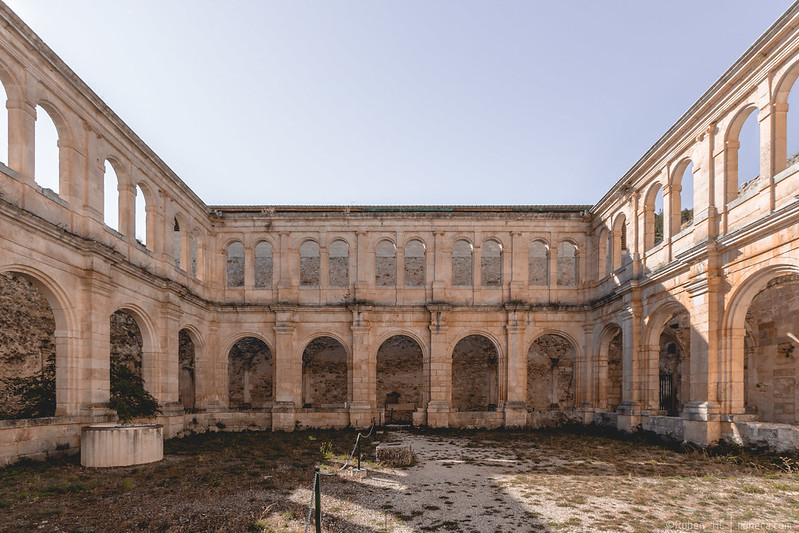
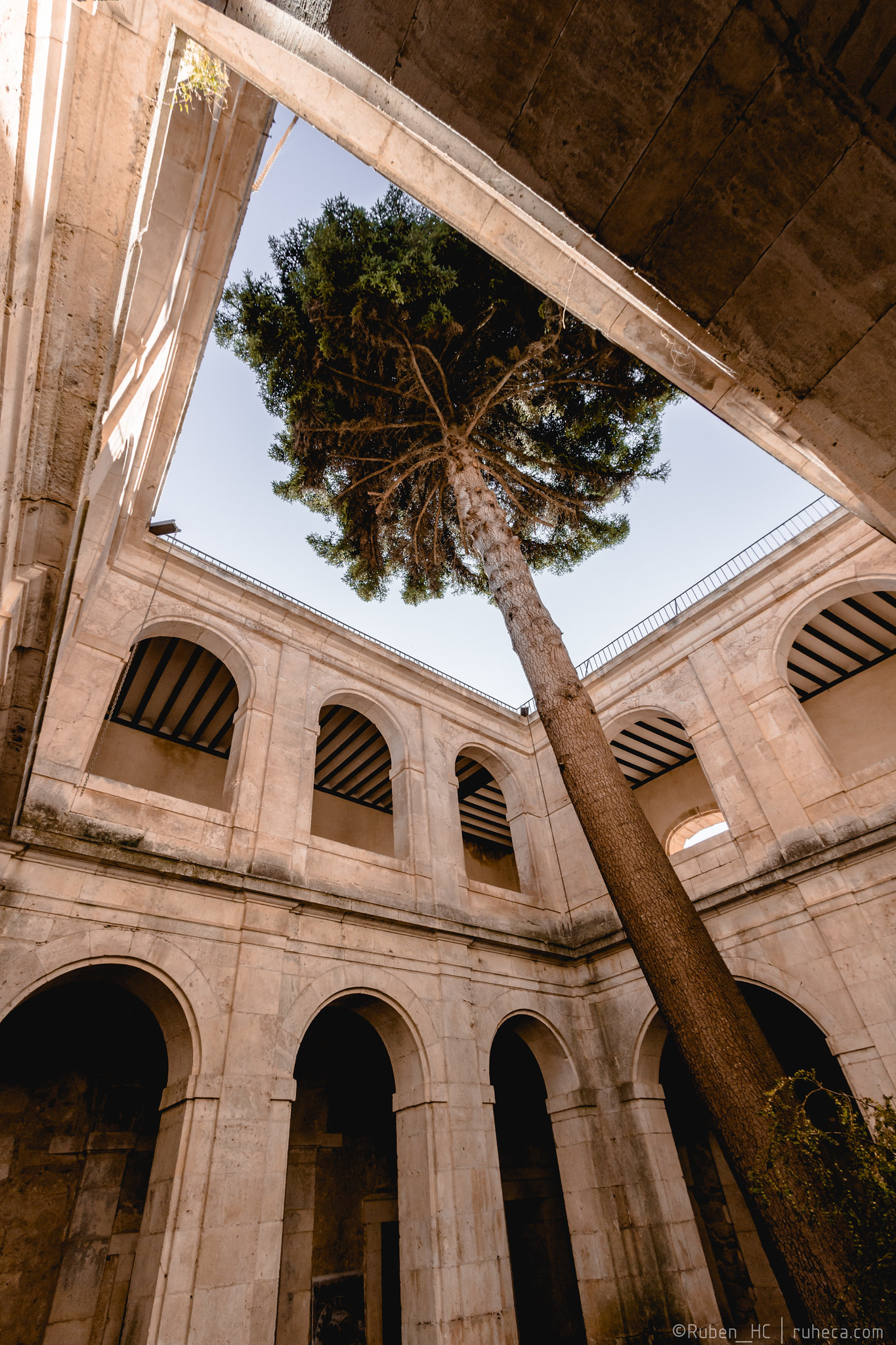
Walking through the remains of San Pedro de Arlanza today is like walking through the pages of a history book open to the elements. The moss-covered walls, the ruined arcades framing the sky, and the vestiges of what were cloisters and monastic dependencies evoke a sense of ancient power and the fragility of human creations in the face of nature’s strength. The silence of the forest, broken only by the singing of birds and the rustling of the wind through the trees, intensifies the contemplative atmosphere of the place.
The Sierra de la Demanda, with its mountainous landscape, its beech and oak forests, and its crystal-clear streams, provides an incomparable natural setting for the monastery ruins. The feeling when exploring the place is one of being immersed in a natural environment where history has left a profound but harmonious mark. The exploration on foot of the surroundings allows you to discover hidden corners and enjoy the rugged beauty of the mountains.
For the traveler seeking off-the-beaten-path destinations in the province of Burgos, San Pedro de Arlanza offers a unique experience. The ancient vibe emanating from its stones, the melancholic beauty of its ruins, and the serenity of the surrounding forest invite reflection and spiritual connection. It is a place where the past feels palpable, where nature embraces history, and where silence tells stories of centuries of splendor and abandonment. A visit to San Pedro de Arlanza is a journey through time, an immersion in the powerful history of Castile in a natural environment of singular beauty.
Sources:
- Wikipedia – San Pedro de Arlanza Monastery:
- https://en.wikipedia.org/wiki/San_Pedro_de_Arlanza_Monastery
- Arte Románico: San Pedro de Arlanza Monastery:
- http://www.arteguias.com/monasterio/sanpedrodearlanza.htm
- Junta de Castilla y León – Cultural Heritage:
- https://patrimoniocultural.jcyl.es/
- Romanico Digital: San Pedro de Arlanza:
- http://www.romanicodigital.com/burgos/horthiguela/sanpedro.html
- Blog “Spain is More”: San Pedro de Arlanza, Cradle of Castile.