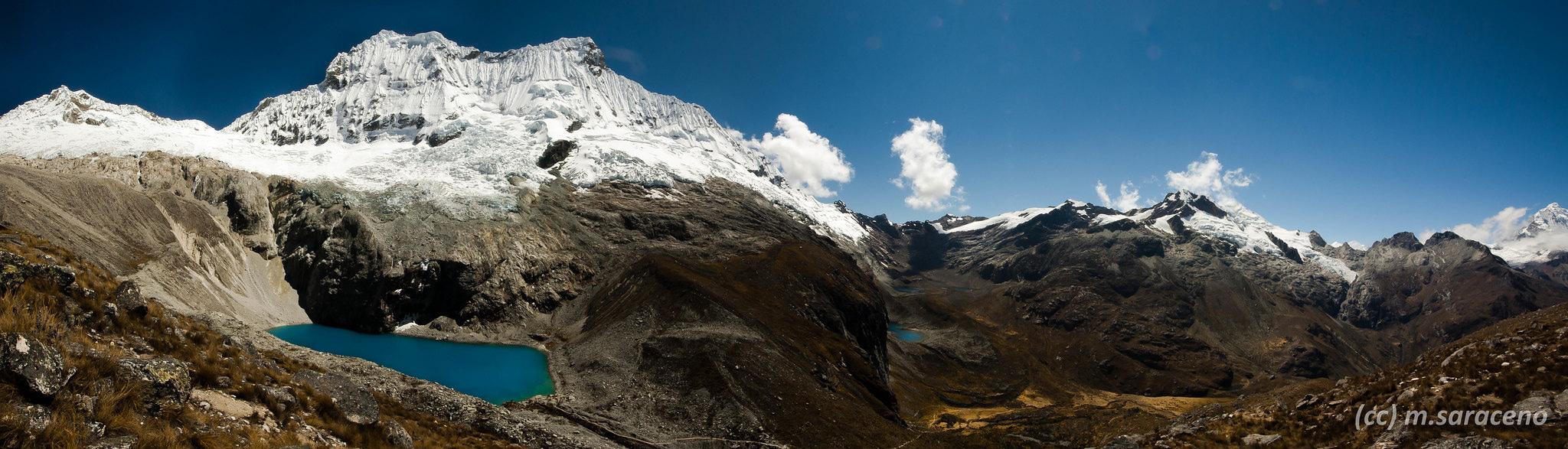
In the heights of the Cordillera Blanca, in the Peruvian region of Ancash, lies a mirror of water that is not just a destination, but a meeting point between earth and sky. Laguna 69 mystical Cordillera Blanca is one of those places that defy imagination and will, a natural and epic sanctuary. From the moment you set foot in Huascarán National Park, the thin air of the puna begins to whisper an ancient story to you. The path, which winds through impossible landscapes, takes you through an ecosystem where flora is scarce and fauna—like the vizcacha or the Andean fox—seems part of the scenery. As you climb, the temperature drops, the wind becomes sharper, and every breath is an offering to the vastness of the snow-capped peaks that surround you. The hike is a constant dialogue with the mountain, a test of humility and perseverance.
Ancient Andean peoples believed that the mountains were apus, protective spirits with a life of their own. Chacraraju mountain, from whose meltwaters the lagoon is born, is one of those feared and revered apus. Oral tradition tells that a long time ago, a shepherdess tending her llamas in the valley fell in love with a traveler who promised to return but never did. Heartbroken, the young woman climbed to the foot of Chacraraju and wept inconsolably for days. Her tears, pure and bitter, accumulated to form a lake of a blue so deep it seemed unreal, a sorrow transformed into the most sublime beauty. Today, looking at the turquoise waters of the lagoon, some say you can still feel the grief of that shepherdess, a sadness that, strangely, heals the soul of those who contemplate it. This sacred, isolated place is reached after a journey of approximately 5 to 7 hours (round trip) from the starting point in Cebollapampa, a moderate to high difficulty route that challenges you physically and mentally.
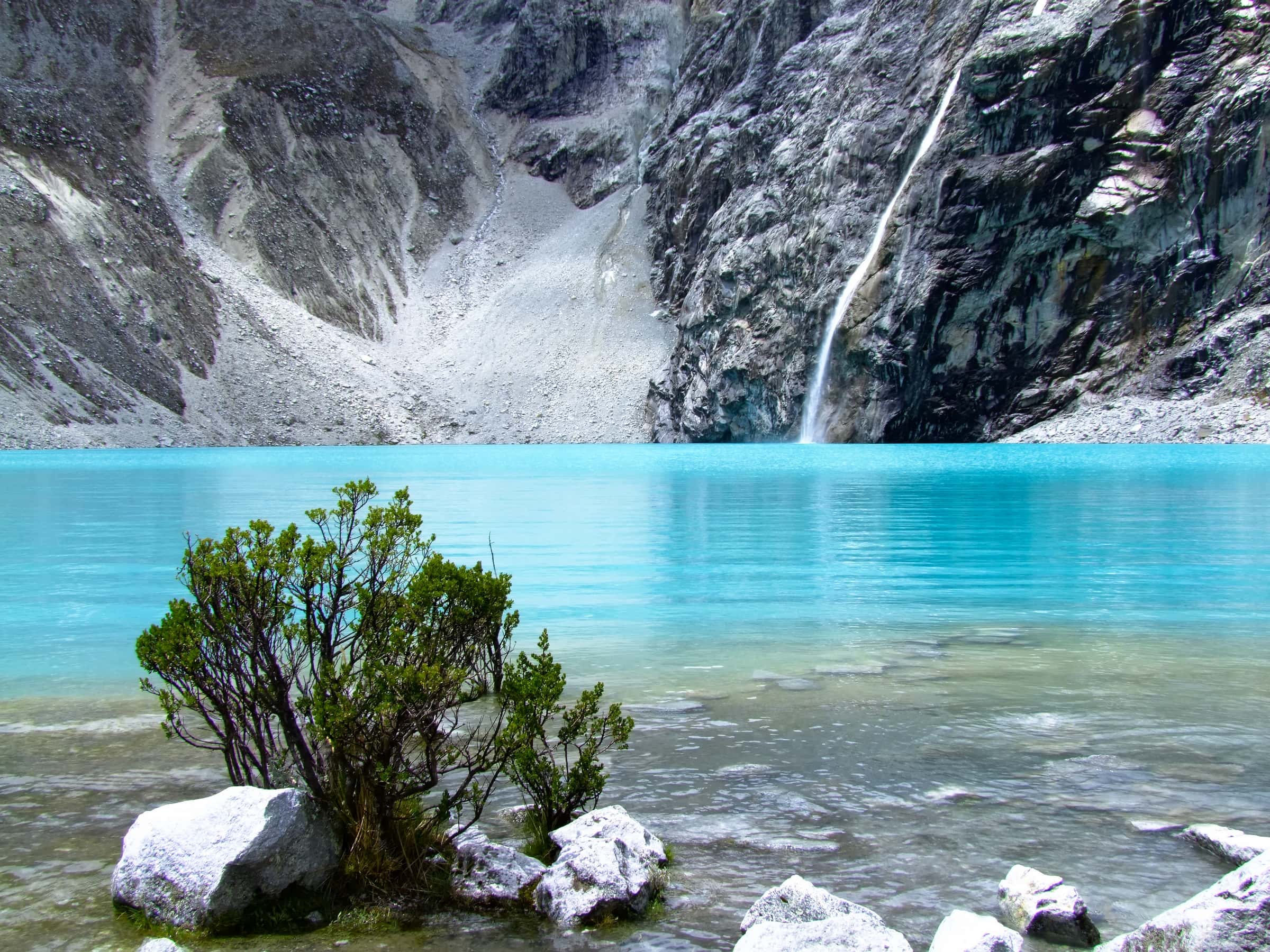
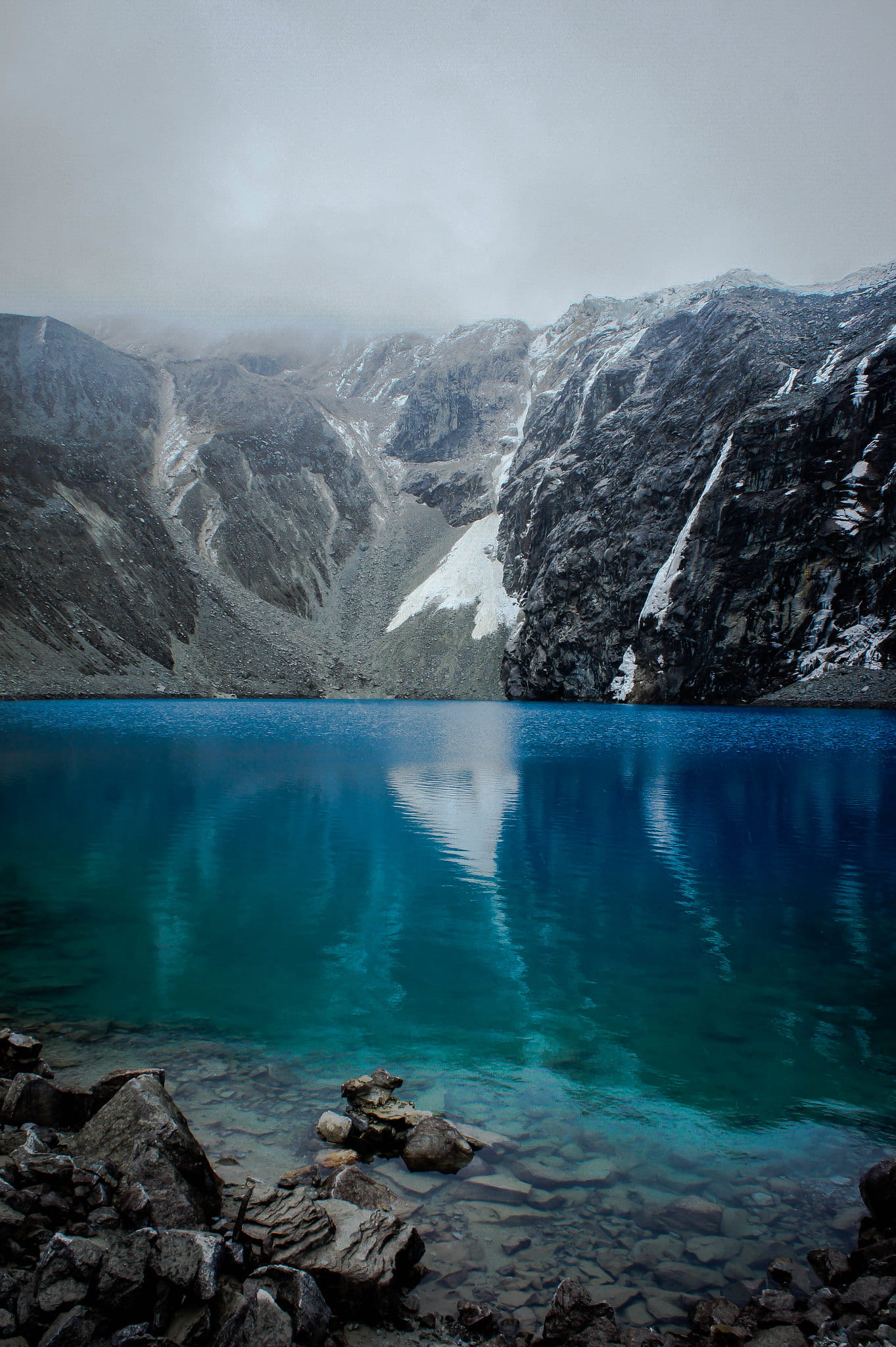
Upon reaching 4,600 meters of altitude, the reward is double: the relief of having conquered the ascent and the visual impact of the lagoon. The contrast is breathtaking: the vibrant turquoise of the water, so pure you can smell its freshness, clashes with the imposing coldness of the rocks, ice, and snow-capped peaks that surround it. The lagoon’s name, the number 69, which was initially assigned simply in a park inventory, has taken on a mystical symbolism for travelers. It represents the Andean duality, the yanantin: the reflection, the above and the below, the sky and the earth uniting at a single point. The turquoise water, flowing from the glacier, symbolizes life that springs from the eternal, the silent sacrifice of the mountain melting drop by drop to give birth to purity. It is a natural altar where you feel small and, at the same time, part of something much greater. For an unforgettable experience, it is vital to travel during the dry season, between April and September, when the skies are clear and the sun illuminates the lagoon’s turquoise with a magical intensity.
The Laguna 69 experience is a true rite of passage. The demanding climb becomes a personal offering, and the reward upon arrival is a moment of deep reflection. It is a place that invites silence, to listen to the wind, and to feel the pulse of the environment. The locals, guardians of these stories, say that looking intently into its waters is like looking at yourself, a mirror of your deepest fears and desires. A traveler-to-traveler tip: altitude is a critical factor. Take the time to acclimate in a nearby city like Huaraz before attempting the trek. Wear warm clothing, sunscreen, and a light backpack with water and energy snacks. While there is no commercial activity, the feeling of being in a natural sanctuary, far from civilization, is the true wealth of the place. Looking back, you will have not only conquered the mountain, but reconnected with a part of yourself that only the wildest nature can awaken.
For more information on the region’s flora and fauna, you can visit the official website of the National Service of Natural Protected Areas by the State (SERNANP). You can also find trekking guides and safety tips on the AllTrails blog. For those seeking more high-altitude adventures, consider exploring the “epic routes of the Andes,” gems in the same region.