In the lush, emerald heart of Terceira Island, in the Azores archipelago, the earth holds ancient secrets, vestiges of a volcanic past that sculpted the landscape in astonishing ways. Far from the beaches and coastal trails, an underground adventure awaits those willing to descend into the island’s depths: the imposing Gruta do Natal and Algar do Carvão. These volcanic formations, less visited compared to more obvious tourist spots, offer an experience that transforms one’s perception of the island’s geology and history. It is a journey that invites wonder, stillness, and a deep connection with the primal force that gave rise to this Atlantic paradise.
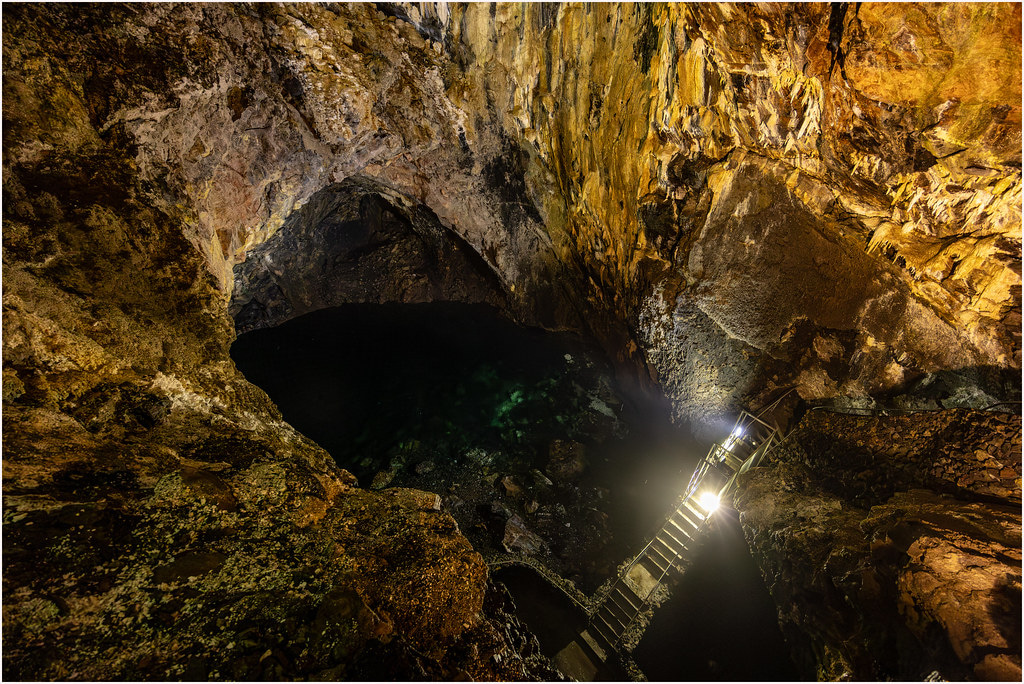
The Gruta do Natal, whose name (“Christmas Grotto”) evokes the almost magical atmosphere perceived within, is a lava tube extending over 700 meters. To access it, one enters through a discreet opening that soon reveals a world of darkness and unique geological formations. The path is moderate but includes narrow passages and steps that challenge the explorer, requiring agility and an adventurous spirit. Here, the air is cool and humid, with an aroma of mineral and earth. As you advance, the sight marvels at petrified lava columns hanging from the ceiling and rising from the ground, creating whimsical natural sculptures. Strategic lighting enhances the rough textures of the walls, the ocher and reddish colors revealing the rock’s mineral composition, and the glimmers of small embedded crystals. The feel of the cold rock under your fingers and the echo of your own footsteps, reverberating in the cavities, contribute to an immersive and slightly unsettling sensory experience, where silence is almost absolute, broken only by the occasional drip of water. It is a testament to nature’s raw force, a reminder that Earth is a living, constantly changing organism.
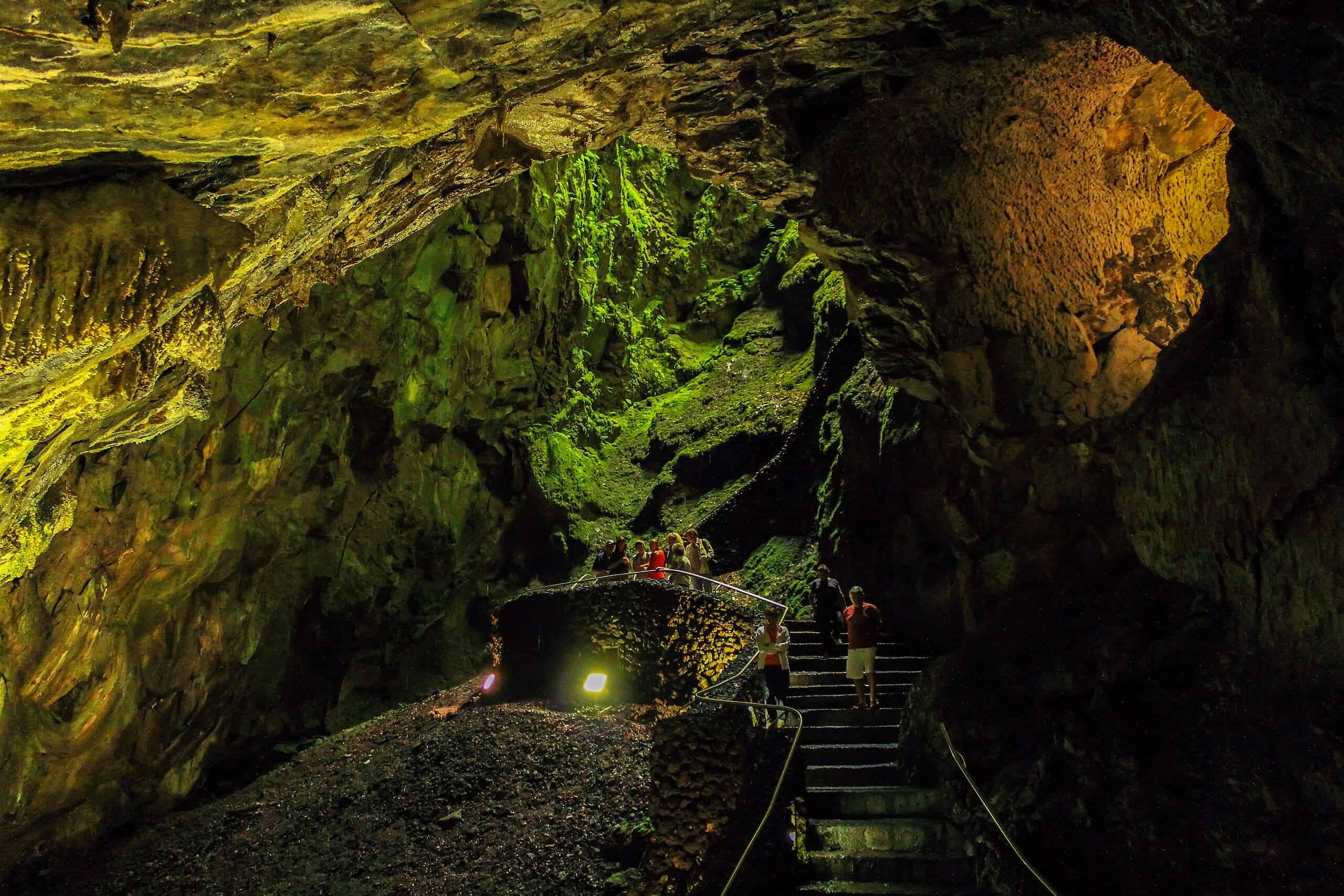
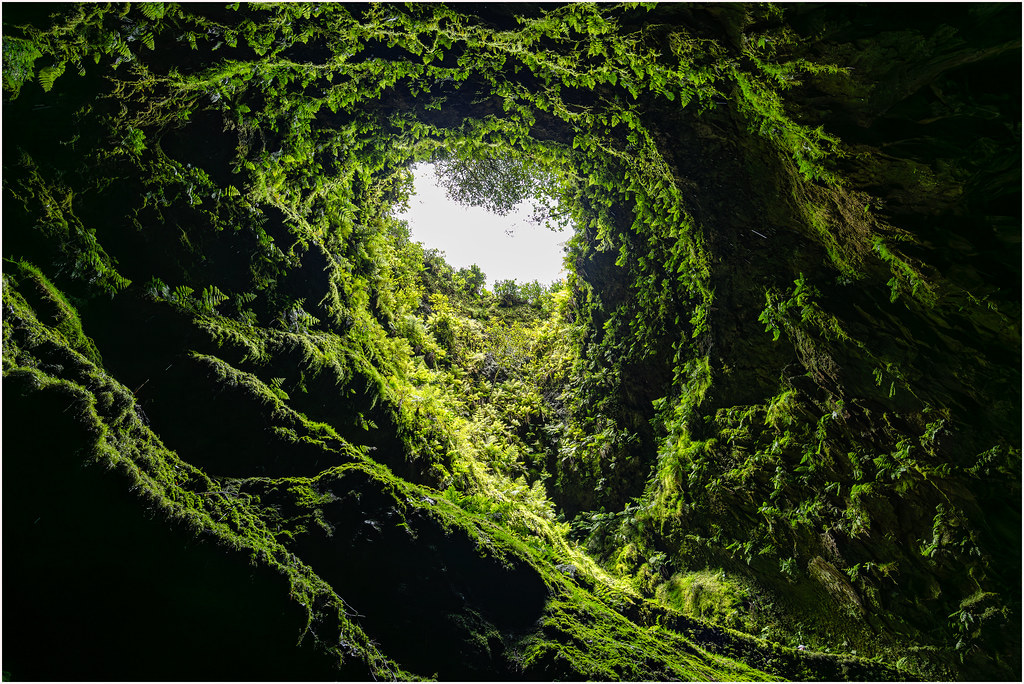
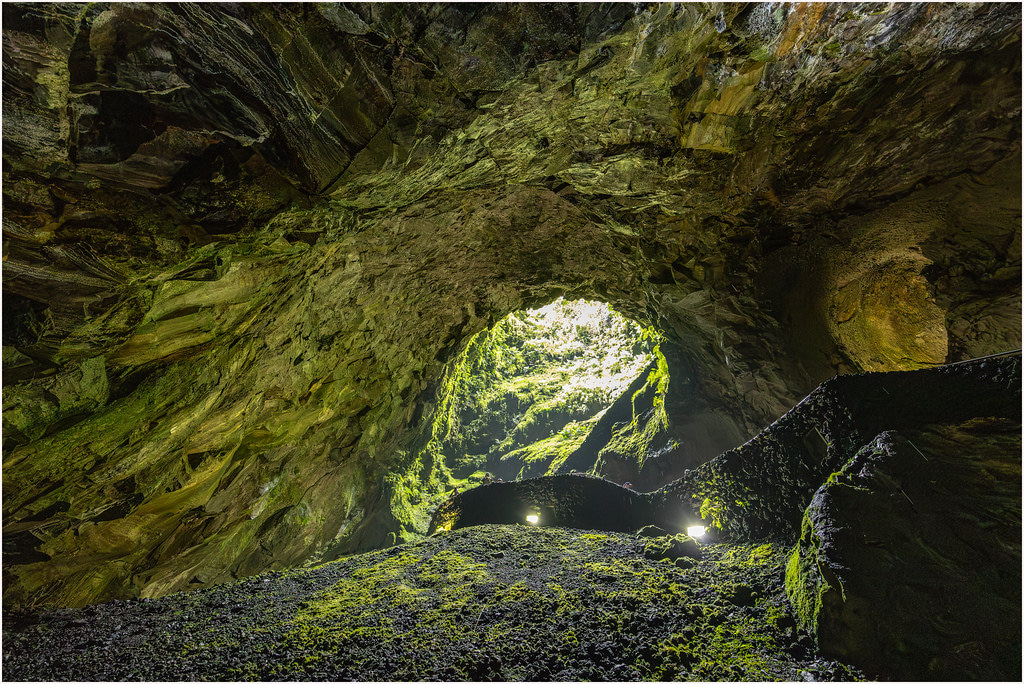
A short distance away, the Algar do Carvão presents an even more dramatic scenario. Unlike Gruta do Natal, which is a horizontal lava tube, Algar do Carvão is a “volcanic chimney” that opens vertically, descending over 90 meters deep. Its mouth reveals itself as a crater open to the sky, through which natural light illuminates part of the vast cavity, creating a spectacular contrast with the darker areas. Exploring this cavity is an impressive descent, via stairs and walkways that wind through the volcano’s throat. Inside, the wonder intensifies with the sight of silica stalactites and stalagmites that formed over millennia, some of them of monumental proportions. At the bottom, a small lagoon of crystal-clear waters reflects the arched ceiling, adding a touch of serenity to the geological grandeur. The ancient echoes resonating in these cavities seem to tell stories of past eras, of violent eruptions and the slow but relentless work of time. The sensation of being inside a volcanic chamber, of touching its cold, rough walls, is a direct connection to the geological origin of the Azores.
For the traveler, it is essential to be prepared. Temperatures in both grottos are cool and constant, so light warm clothing is recommended, even in summer. Comfortable, non-slip footwear is indispensable due to the damp and slippery ground. Although the paths are relatively safe, the narrow nature of some passages and the darkness require caution and respect for the signs. An adventurer-to-adventurer tip: consider visiting both grottos with a local guide, who can enrich the experience with knowledge about Terceira’s geology and legends. Gruta do Natal and Algar do Carvão are much more than simple caves; they are living natural museums, portals to a geological past and an opportunity to experience the imposing beauty of Earth’s formation. The experience of exploring them is a gift of silence, wonder, and a deep connection with the volcanic nature that defines the Azores.