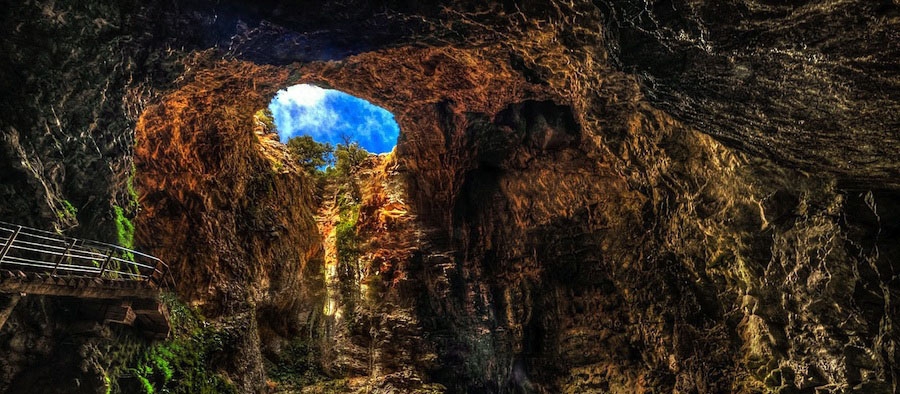
Hidden deep within Morocco’s Middle Atlas mountains, approximately 30 kilometers south of Taza, lies one of North Africa’s most profound and spectacular secrets: the Friouato Caves Morocco. Also known as “Gouffre de Friouato” or Kehf Friwato, these cavities are not just a geological marvel but a destination that beckons to insatiable curiosity and adventurous spirits. Here, where some chambers still have no artificial light, exploration becomes a dance with darkness, offering an astonishing and off-the-beaten-path experience for those seeking authenticity.
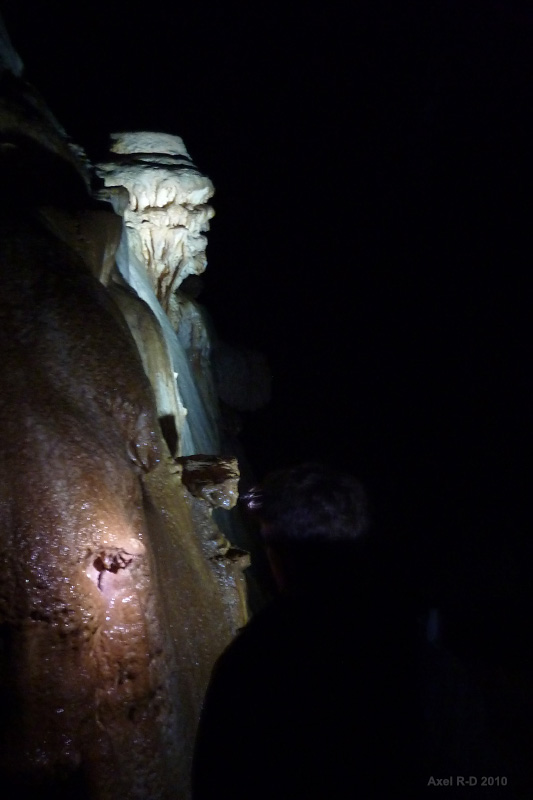
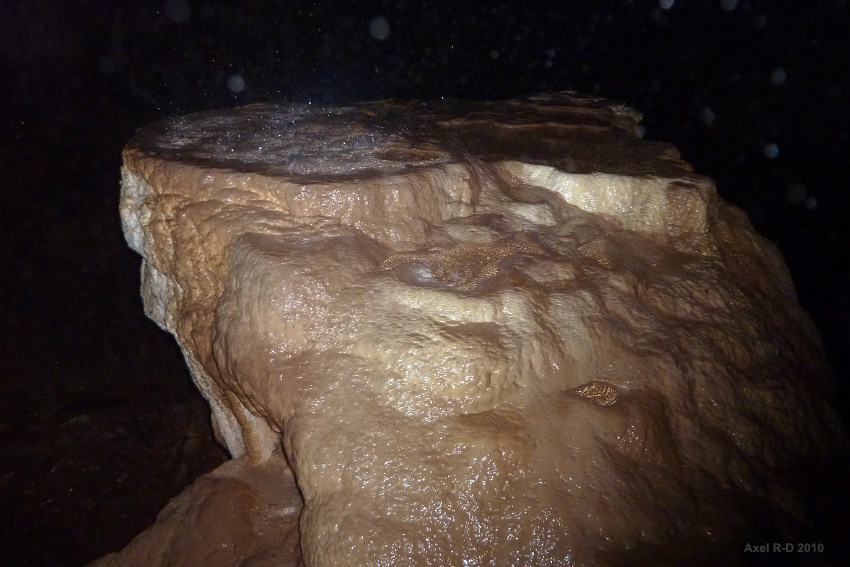
The name “Friouato” evokes mystery, popularly meaning “wind gorge” in Berber, an appellation that resonates with the chilling breath emanating from its depths. Interestingly, a legend also gives it another popular meaning: “Ito’s cave,” a reference to the story of the lovers Ito and Assoukh, separated by their families, where the cave became a witness to Ito’s sorrow. With an entrance shaft nearly 30 meters in diameter, the cave descends to 271 meters of officially explored depth, although internal explorations have reached up to 3-3.5 kilometers, and some experts suggest its network could extend up to 6 kilometers. This vast natural network is a spectacle of galleries, subterranean rivers, hidden lakes, and a profusion of stalactites, stalagmites, and “rock curtains” hanging like petrified veils. The acoustics and formations are so captivating that local guides, with an ancient art, even use certain structures to “play” melodies on the rock, transforming the cavern into a natural instrument that resonates with the sounds of the underworld.
The history of the Friouato Caves Morocco is marked by a pioneering spirit. In 1930, Norbert Casteret, the celebrated French speleologist, penetrated to 146 meters, being the first to discover a subterranean river flowing through its core. Decades later, in 1969, an expedition from the University of Exeter carried out dives that allowed them to pass static sumps and reveal even larger chambers. Since 1932, part of the cavity was opened for tourism, with stairs and artificial light, allowing visitors to marvel at this underground world.
Awaiting Reopening: An Adventure in Transition
As a traveler, it’s important to know that since 2016, the Friouato Caves have been closed to the public following an unfortunate accident that caused rockfalls. This situation also led to management disputes between the Bab Boudir commune and the Regional Directorate of Eaux et Forêts. However, the good news is that Moroccan authorities are investing in its future. Significant reinforcement works are currently underway, including the installation of stainless steel walkways and railings, with the aim of reopening this treasure as soon as possible and ensuring visitor safety. This renovation effort underscores the cultural and tourist importance Morocco places on this impressive site. For official information on the current reopening status, you can check the Moroccan Ministry of Tourism or the Tazekka National Park website.
While the Friouato Caves Morocco prepare to welcome explorers back into their illuminated depths, the Tazekka National Park region, where they are located, continues to offer speleological and hiking adventures in other cavities such as Chaâra or Chiker, always guided by specialized local experts. These guides not only know the routes but often share anecdotes and local wisdom that deeply enrich the experience, connecting you with the authenticity of the Atlas. If you’re looking to explore the underground wonders and rich culture of the Atlas, don’t hesitate to immerse yourself in this experience. You might also be interested in our Hiking Trails in the Atlas.
Traveler’s Insights for Friouato and its Surroundings:
- Speleology Preparation: While the tourist section will be safe once reopened, true speleology requires specialized equipment and accompaniment. Always prioritize safety and the expertise of certified guides.
- Indoor Climate: The temperature inside the cave is cool and constant (ideal to bring warm clothing and water-resistant, non-slip footwear), even in summer.
- Local Support and Sustainability: Consider hiring guides and services from local communities in Bab Boudir or Taza. Their knowledge will not only enrich your visit but also contribute to responsible and sustainable tourism in the region, directly supporting its inhabitants. Always remember the “leave no trace” philosophy.
- Pre-verification: Given the reopening situation, always verify the current status of the caves before planning your trip. You can consult sites like Show Caves of the World for general information on tourist caves.
The Friouato Caves Morocco are more than just a cave; they are a natural and cultural monument awaiting rediscovery. With their impressive depth, breathtaking formations, echoes of past explorations, and whispers of ancient legends, they represent an ideal gem for culture, adventure, and exploration. When their doors open again, it will be an irresistible call for every roadtripper and traveler longing for a deep connection with the astonishing and the unusual. Get ready to delve into the bowels of the earth and unravel the secrets of Friouato!