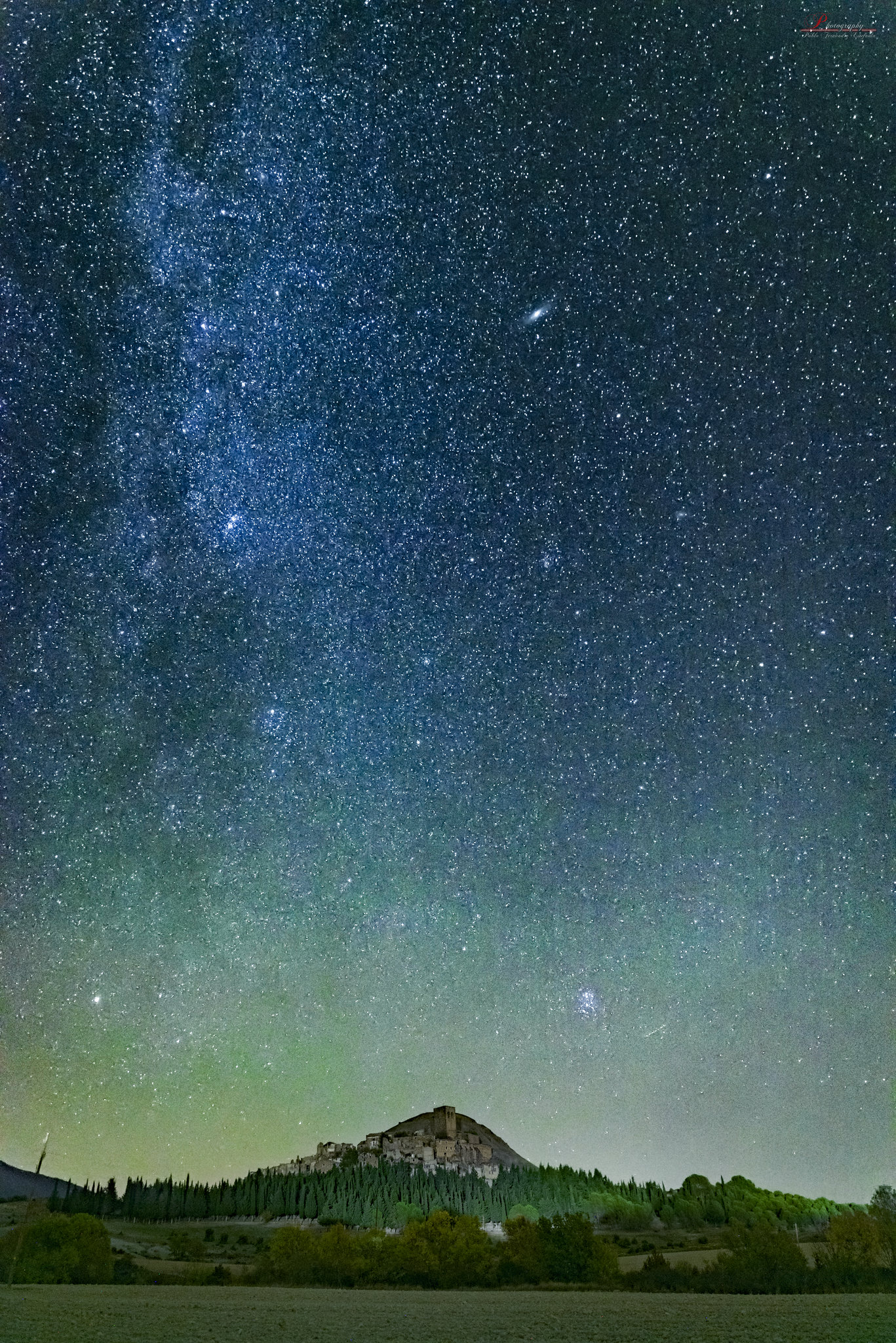
In the heart of the Jacetania region, province of Zaragoza, Aragon, on the shores of the Yesa reservoir, lies a silent testament to the passage of time and human decisions: the depopulated village of Escó. Its cobblestone streets, now invaded by vegetation, and the ruins of what were once homes and a proud church, evoke a profound sense of urban exploration in an environment where nature slowly reclaims its territory. Escó does not appear in conventional tourist guides, but its rustic and mysterious atmosphere attracts those travelers seeking a palpable connection with history and reflection in a unique space.
The earliest traces of life in Escó are lost in Aragonese history, dating back to the Bronze Age. Its strategic location made it a relevant point, even housing a medieval castle that attested to its importance in past eras. However, Escó’s fate took a turn in the 1960s. The ambitious construction of the Yesa reservoir meant the expropriation of the most fertile lands of the municipality, the economic engine of its inhabitants. This event triggered a gradual but inexorable exodus, leaving behind a village that once had about 260 residents and that suddenly plunged into a deep silence.
Today, walking through the deserted streets of Escó is an overwhelming experience. The stone houses, with their crumbling walls and empty windows, seem to whisper stories of past lives. The Aragonese nature, tenacious and patient, pushes its way through the paving stones, climbs the facades, and covers the roofs with a blanket of moss and grass. In the center of the depopulated area, the ruins of the Church of San Miguel Arcángel stand like a skeleton of faith. Despite its state, the apse, the Romanesque facade, and part of the side walls can still be distinguished, witnesses to the modifications it underwent between the 13th and 14th centuries. Whoever ventures inside perceives a somber, almost spectral atmosphere that invites historical reflection.
Although the main altarpiece of San Miguel Arcángel now adorns the Church of the Immaculate Heart of Mary in Jaca, and the baptismal font along with other objects are exhibited in the Diocesan Museum, the imposing presence of the church ruins in Escó remains a powerful reminder of the community life that once flourished there. The Yesa reservoir, the cause of its demographic decline, has paradoxically become a defining element of the current landscape, reflecting in its waters the melancholy of a past lost but not forgotten.
Despite the abandonment, the memory of Escó persists. A tenacious family of shepherds keeps a physical connection with the place alive, while the Association Pro Reconstrucción de Escó works passionately to preserve its heritage and promote its remembrance through annual gatherings and research efforts. Exploring Escó is, therefore, an opportunity not only to witness a ghost town but also to connect with the resilience of its people and the effort to keep its history alive. For the traveler seeking unusual destinations in Aragon, Escó offers an authentic and moving experience, a place where silence speaks and stones tell stories of a past that still resonates in the present.
Sources:
- Zaragoza Fieles: Escó, pueblo con historia:
- https://zaragozafieles.es/2020/01/esco-pueblo-historia/
- Asociación Pro Reconstrucción de Escó:
- http://www.deesco.org/
- Wikipedia – Escó:
- https://en.wikipedia.org/wiki/Esc%C3%B3
- Romanico Aragonés: Iglesia de San Miguel Arcángel de Escó:
- http://www.romanicoaragones.com/rutas/ruta00/00-01-esco.htm
- Ayuntamiento de Sigüés:
- http://www.sigues.es/