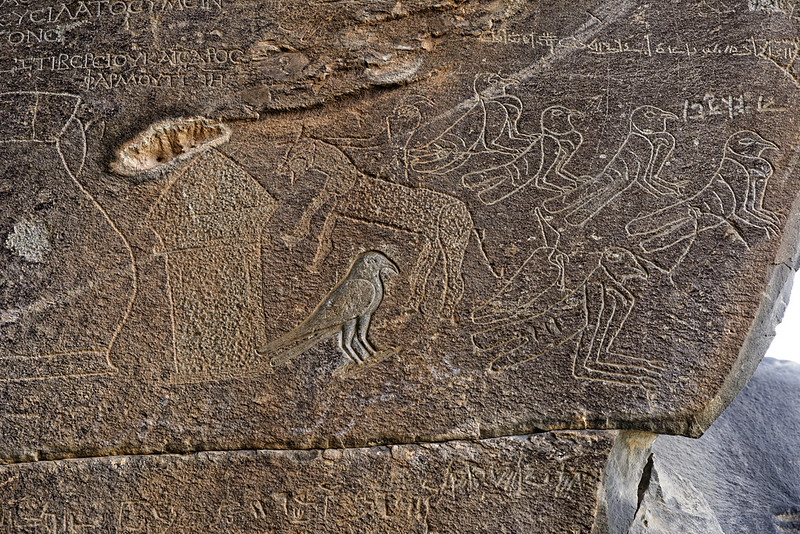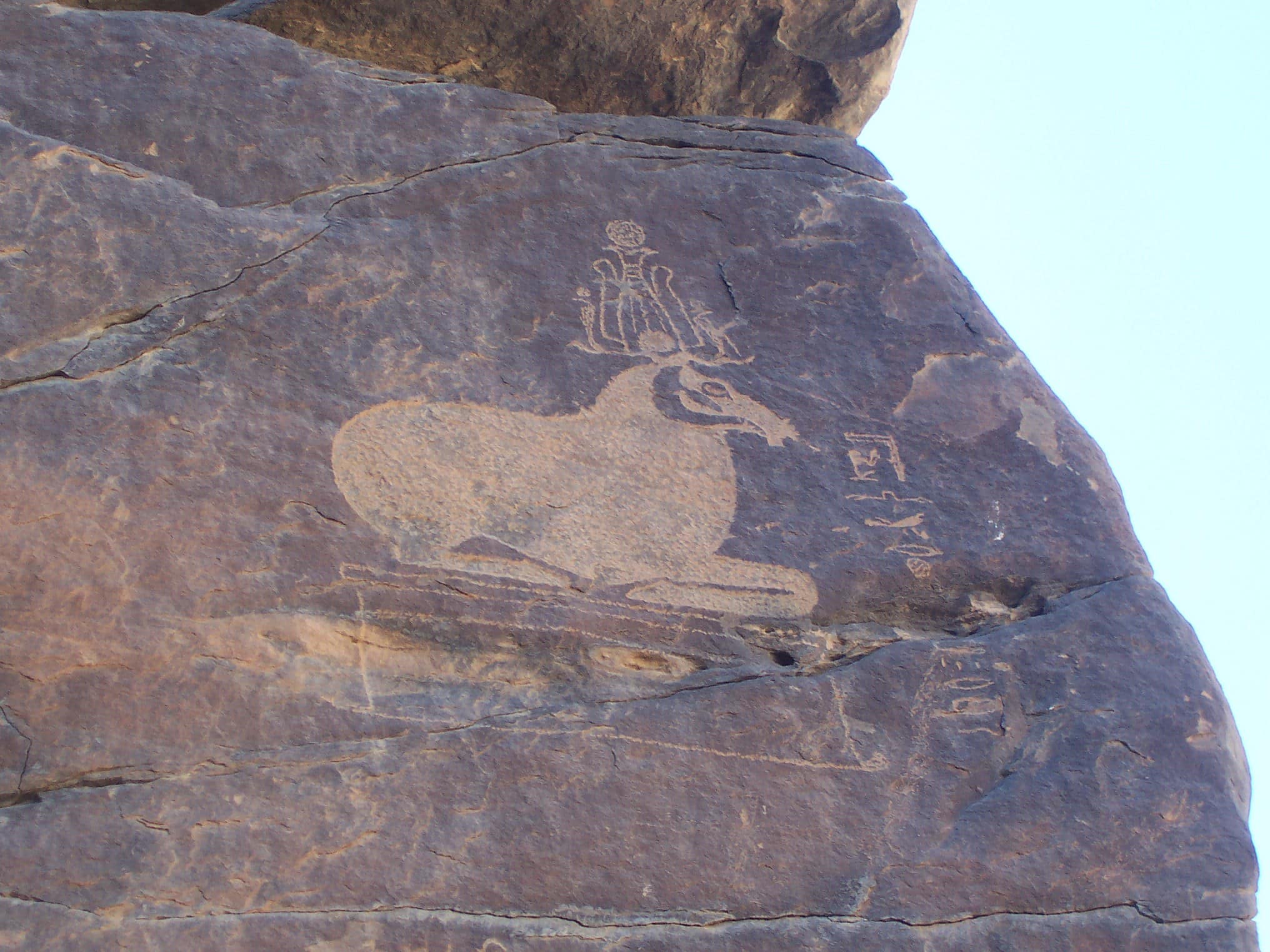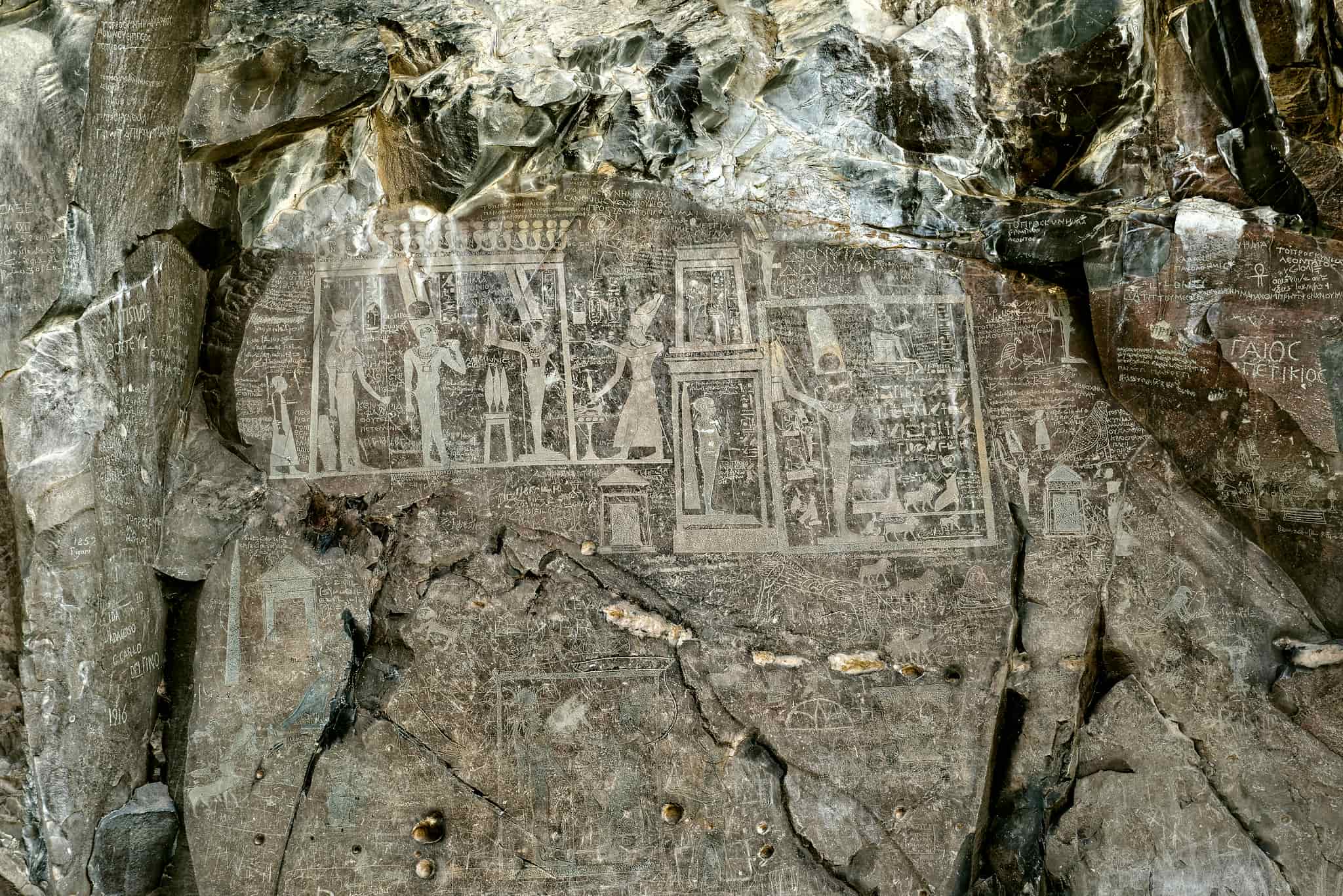
Far from the monumental majesty of temples and pyramids, in the silent vastness of Egypt’s Eastern Desert, awaits an even more ancient window into the past: Eastern Desert Rock Art. These enigmatic paintings and engravings, scattered in remote caves and cliffs of wadis like Wadi el-Barramiya, Wadi Hammamat, and areas east of Idfu, offer a direct glimpse into the earliest human expressions in the region. It is a sanctuary of prehistoric art, far from usual tourist routes, an enigmatic and ancestral place, ideal for lovers of archaeology, mystery, and adventure.
Walking among these cliffs means entering a sanctuary of silence and dry wind. Your footsteps echo among the quartz and granite formations, while your eyes adjust to catch figures carved with rocky tools. You can perceive the ochre and yellowish colors of the paintings, vibrating against the stone, and feel the rough touch of the engravings. As you lean in to touch them with your fingertips, you perceive an ancient, mineral taste, like the echo of a lost world. It’s a mystical journey to the deepest roots of human art and an immersion into Egypt’s prehistory.
The manifestations of Eastern Desert Rock Art are a vibrant testament to life in remote eras. They are primarily divided into engravings (petroglyphs) and paintings (pictograms), and their themes are varied and revealing:
- Hunting scenes: Human figures, often armed with bows and accompanied by dogs, stalk ibex, antelopes, and wild donkeys. Surprisingly, some of these hunting scenes are depicted in boats, suggesting activities on the now dry wadi beds or symbolizing journeys.
- Dancing figures: Human figures with raised arms, sometimes holding ropes or feathers, possibly engaged in ritual acts of control over animals or fertility ceremonies.
- Boat engravings: With over 240 documented boats, these representations are particularly significant. They reflect ancient movements from the Nile Valley towards the mineral deposits of the Eastern Desert, evidencing trade and exploratory routes.
- Diverse fauna: An astonishing repertoire includes lions, hippos, crocodiles, giraffes, and hybridized animals. This abundant and diverse fauna reminds us of past climatic eras that were much wetter and greener in what is now an arid desert, offering a unique insight into the ancient ecosystems of the Eastern Desert.
The chronology of this rock art is vast. They are mainly attributed to the Predynastic and Late Periods (c. 4000–2500 BC), placing them much earlier than the great pyramids. However, some findings, especially at sites like Qurta on the eastern bank of the Nile, could date back to the Late Pleistocene (~15,000–10,000 BC), pushing the roots of Egyptian art to an astonishing antiquity. This antiquity makes these manifestations one of the most important testimonies of prehistoric human activity in the region.
Practical recommendations for the conscious explorer:
The Eastern Desert is an inhospitable terrain, with winding paths between quartz and granite cliffs, ideal for those seeking authentic archaeology and an immersive travel experience. The early sun filters light through crevices, casting shadows of carved figures onto the stone, while the air smells of nomadic shrubs’ resin and desert dust. For a safe and respectful visit:
- Expert guides: Always go with expert rural guides, such as Bedouins or local Middle Eastern guides. Their knowledge of the terrain and local communities is invaluable.
- Preparation: Carry a GPS, ample water, provisions, and appropriate desert gear. Self-sufficiency is key in these remote areas.
- Site respect: It is crucial not to touch the engravings, leave no trash, avoid painting or carving, and minimize any impact on this fragile heritage.
- Best time to visit: The best time to visit is during autumn or winter (October–February), to avoid the extreme summer heat of the desert.
The Eastern Desert Rock Art of Egypt are not just drawings; they are messages from the dawn of humanity, carved into the very skin of the earth. A trip to these sites is a deep connection with our ancestors, an adventure at the heart of mystery, and a privilege for those seeking the true hidden gems of world heritage.