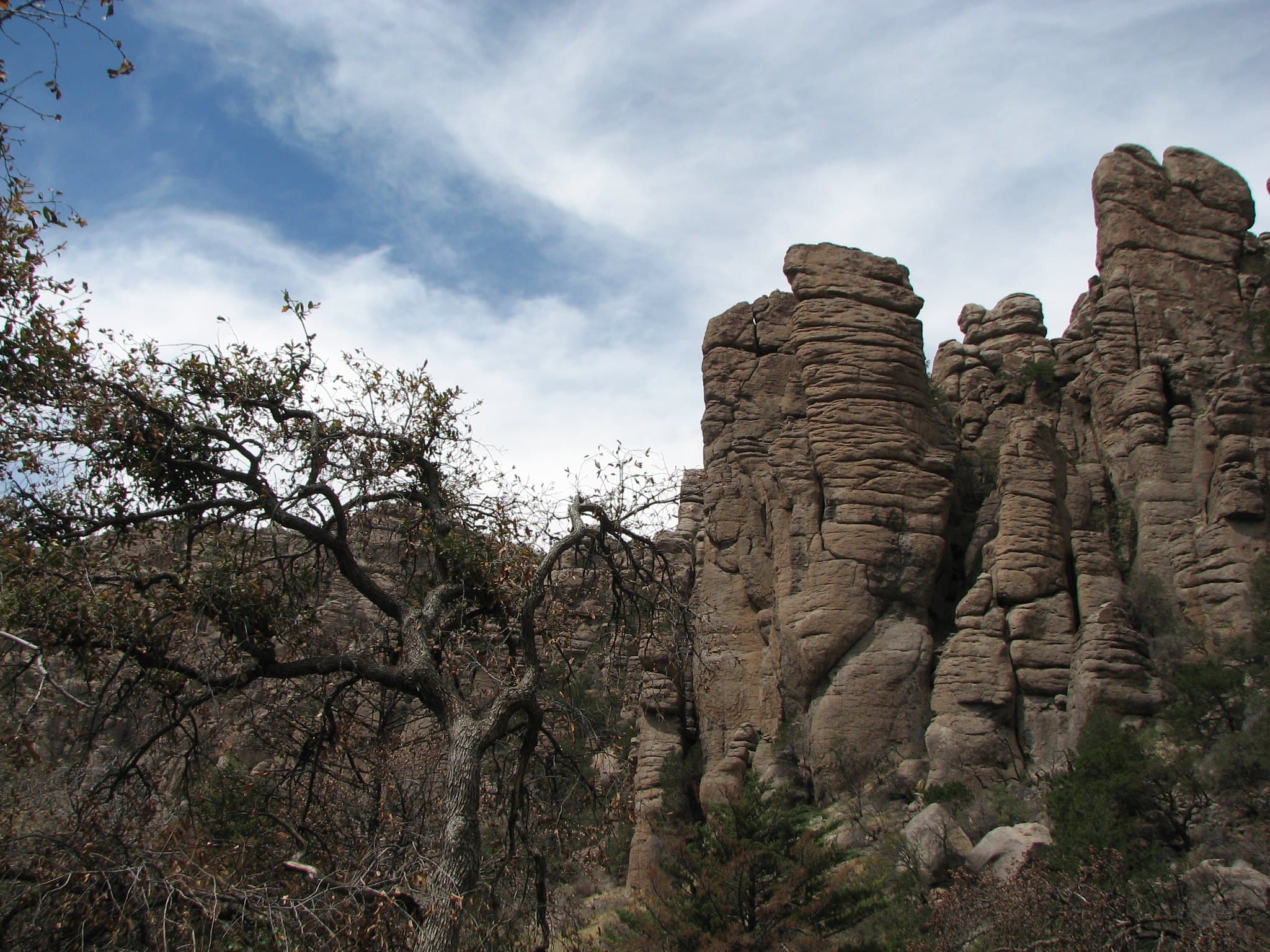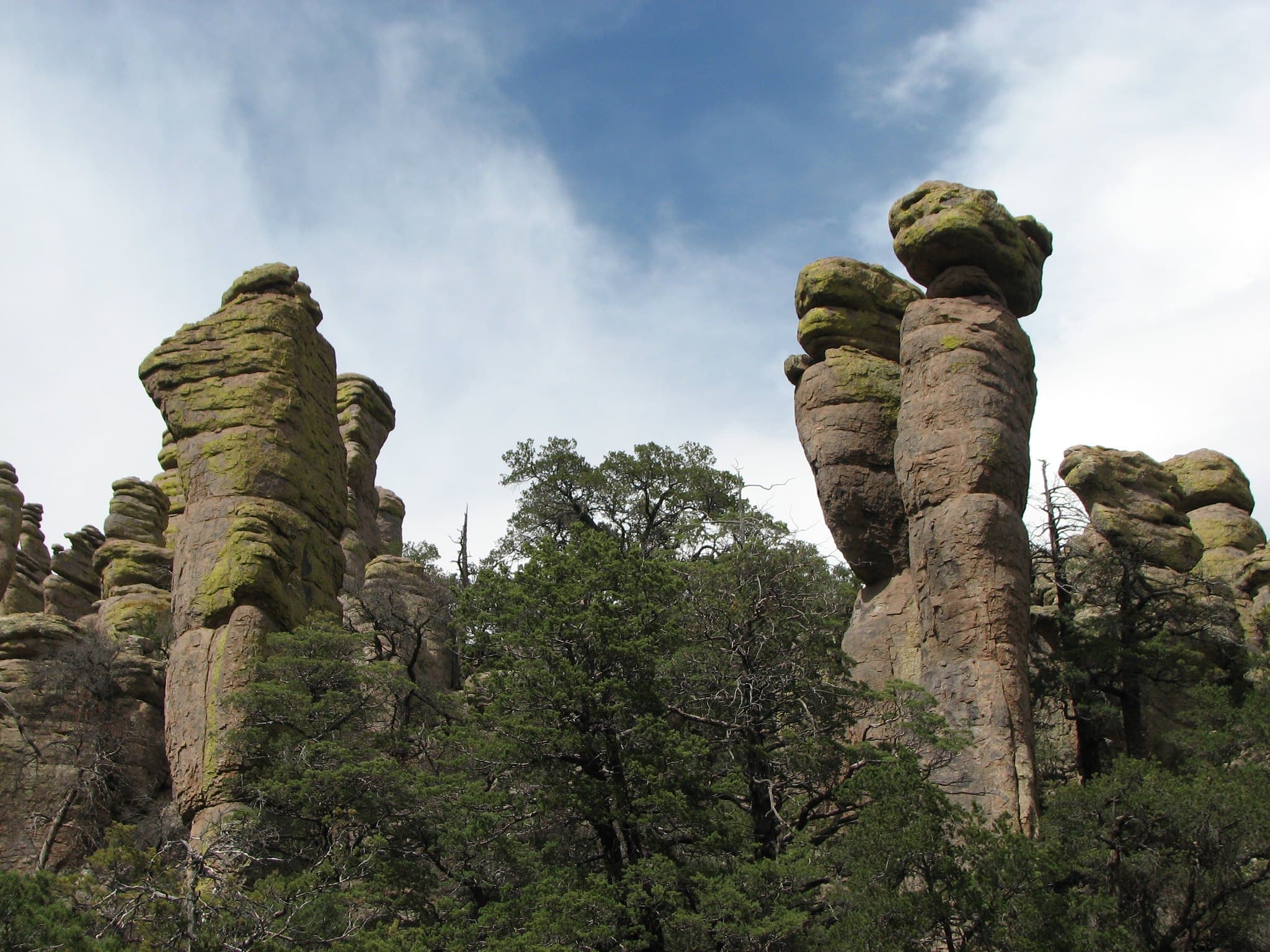
In the far southeastern corner of Arizona, the desert meets the sky. Silence reigns. Lies a place that feels otherworldly: Chiricahua National Monument. Located just 60 km from the Mexican border, this remote park is a labyrinth of volcanic rock towers. These towers are geological witnesses to cataclysmic eruptions. They have endured millions of years of wind and water.
The park’s iconic rock formations, known as hoodoos, rise like slender grey and orange spires that defy gravity. Chiricahua National Monument is home to fascinating sites. This surreal landscape was forged by a massive eruption some 27 million years ago. The Turkey Creek volcano spewed molten ash that hardened into rhyolitic tuff—the stone canvas of today’s Chiricahua.
But Chiricahua is more than just geological splendor. It is a crossroads of cultures and histories. For centuries, these mountains served as sanctuary to the Chiricahua Apache, led by legendary figures such as Cochise and Geronimo. Even now, visitors can sense their presence echoing through the valleys and canyons. They once roamed these areas in the heart of Chiricahua National Monument.
Biodiversity is another of Chiricahua’s hidden treasures. The monument is located where four major ecosystems converge. These are the Sonoran Desert, Chihuahuan Desert, Rocky Mountains, and Sierra Madre Occidental. It hosts a surprising array of flora and fauna. Every turn rewards the observant explorer with the treasures of Chiricahua National Monument. These treasures include coatis, white-tailed deer, migratory hummingbirds, and highland orioles.
For hikers and overlanders, Chiricahua offers more than 17 miles of well-kept trails. Routes like the Echo Canyon Loop and the Heart of Rocks Trail lead adventurers through hoodoo forests. They cross natural bridges and reach breathtaking viewpoints. These routes showcase the wonders of Chiricahua National Monument. Unlike other parks in the Southwest, solitude here is a steady companion—perfect for those seeking introspective experiences.
One of the most striking aspects of the monument is how it transforms with light. At Chiricahua, sunrise makes the rocks glow gold; at sunset, they blush in hues of crimson and violet. It is a living stage, in constant dialogue with sky and weather.
Despite its wonders, Chiricahua National Monument remains largely unknown even among seasoned travelers. Its geographic isolation has preserved its essence, keeping both its ecosystem and spirit of contemplation intact.
Visiting Chiricahua National Monument lets you reconnect with the earth’s slow artistry. It also bridges the fragile balance between history, nature, and time. It is a journey that transforms, that roots deeply, and opens one’s gaze to new ways of seeing the world.