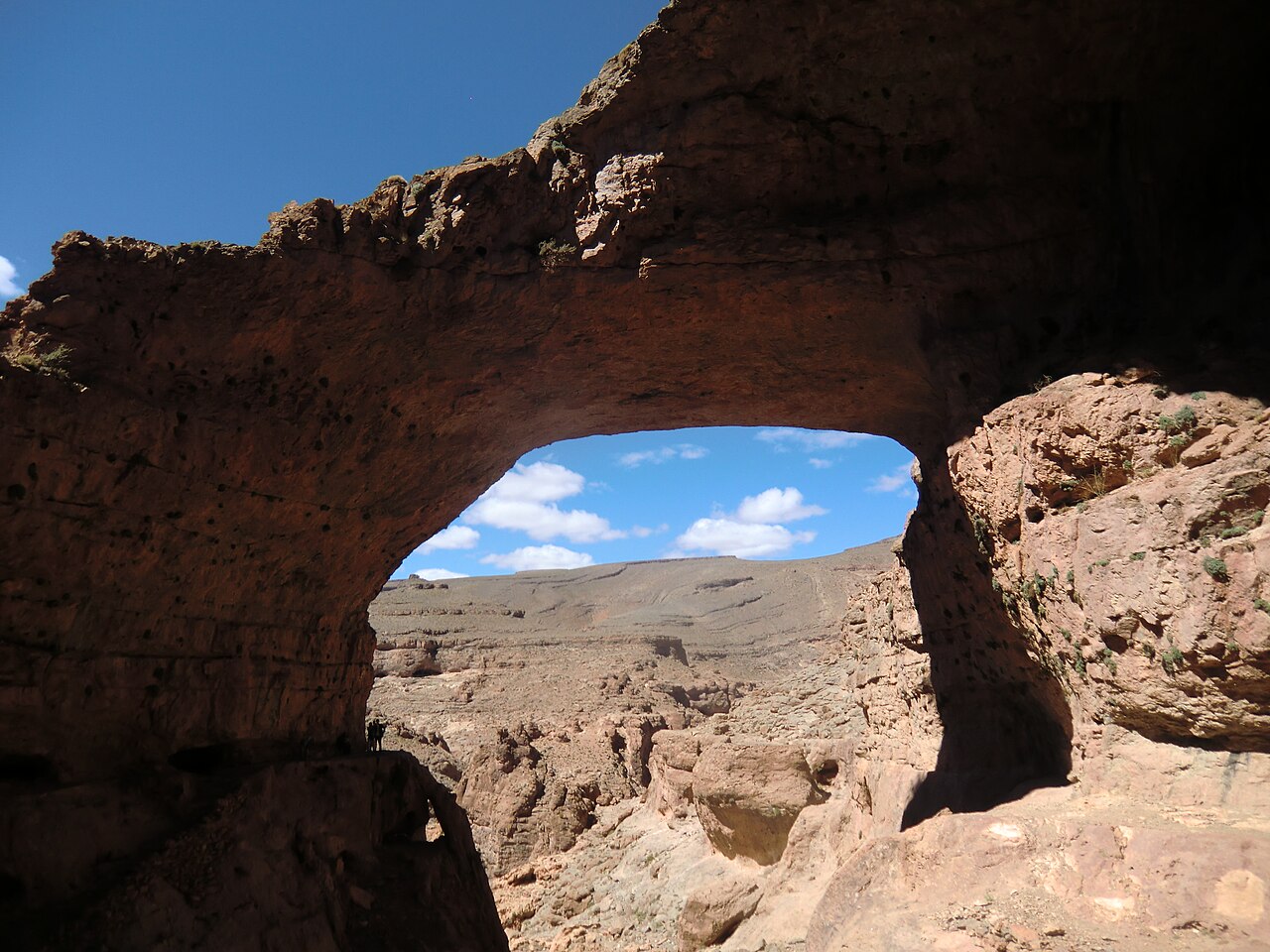
In the wild heart of Morocco’s Central High Atlas, where mountains rise majestically and time seems to dissolve, lies one of the kingdom’s best-kept secrets: the Assif Melloul Canyon. Known locally as the “White River” (Assif Melloul in Amazigh), this gorge is much more than a geographical feature; it is a natural and cultural paradise, a corner of pristine nature Morocco where one unequivocally feels “like being in another century.”
The Assif Melloul river, born in the snowy peaks of the Atlas, has sculpted an impressive landscape over millennia. High walls of limestone and sandstone rise, in some sections, more than 100 meters, creating a dramatic spectacle of stone, light, and the constant flow of water. Unlike more well-known gorges, this hidden canyon Morocco offers an unparalleled experience of isolation and authenticity. The river’s fresh, crystalline waters have not only carved the rock but also nurture lush vegetation along its banks: leafy walnut trees, ancient fig trees, and cereal fields that flourish thanks to the ingenuity and effort of the Berber communities.
This Assif Melloul Canyon is a true Eden for Morocco trekking and adventure enthusiasts. The trails, often narrow and winding, follow the river’s course, crossing improvised wooden bridges that add a touch of rustic charm. What is truly captivating are the hanging villages Morocco that dot the canyon’s slopes. Villages like Taghia, Zaouiat Ahansal, and Agoudim, built with stone and mud, seem suspended in time and space, organically integrated into the landscape. In summer, the reward for the effort is to immerse oneself in the natural pools formed by the river, a refreshing and deeply rooted experience with the environment.
Life in the Assif Melloul Canyon beats to the rhythm of Amazigh culture. These Berber communities, dedicated to agriculture and livestock, have maintained their traditional ways of life, wisely adapting to the harshness and beauty of this environment. It is common to encounter nomadic shepherds Morocco who still cross the mountains with their herds of goats and sheep, a living testament to a millennial relationship between man and land. The local markets, vibrant and authentic, are a reflection of this traditional life, brimming with handcrafted and agricultural products.
The White River Morocco and its canyon are steeped in deep spirituality for the local communities. Considered sacred places, they are connected to legends and practices of respect for nature. Visitors often describe the “magic” of Assif Melloul, the strength and tranquility emanating from this remote corner, a feeling that goes beyond the visual.
While access to the Assif Melloul Canyon is not as straightforward as to other more touristy destinations, this only adds to its wild charm. Routes typically depart from Zaouiat Ahansal or Taghia, and it is highly recommended to have a local guide or an experienced driver for exploring the mountain roads. Spring (April-June) and autumn (September-November) are the best times to visit, offering pleasant temperatures and green landscapes, although in summer, the intense heat makes the river’s waters a welcome relief.
In short, the Assif Melloul Canyon is a sanctuary, an almost secret corner that offers a window into an unspoiled Morocco. Here, wild nature and Amazigh culture merge into a dreamlike landscape, a journey to another century where authenticity and adventure await the traveler.