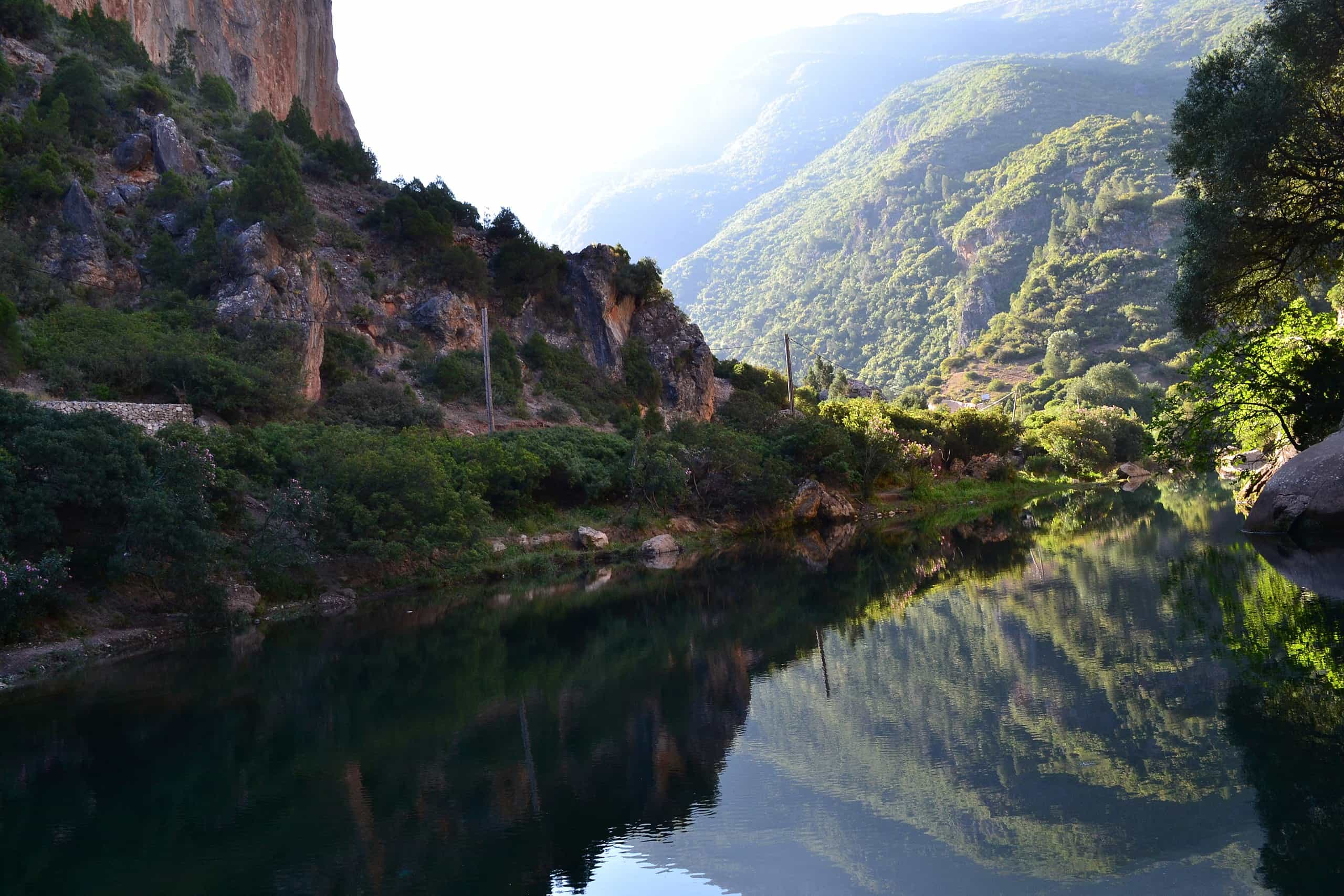
In the majestic and enigmatic Rif Mountains, just a 45-minute drive from the captivating blue city of Chefchaouen, lies a natural treasure that invites introspection and adventure: Akchour and God’s Bridge. Within the lush confines of Talassemtane National Park, this site is a symphony of water, stone, and silence, a corner of Morocco nature that pulls you away from routine to immerse you in an atmosphere of meditation and wonder. Here, straying from the main path is not just an option, but an invitation to discover hidden pools among the cliffs, an ideal spot for meditation or reading.
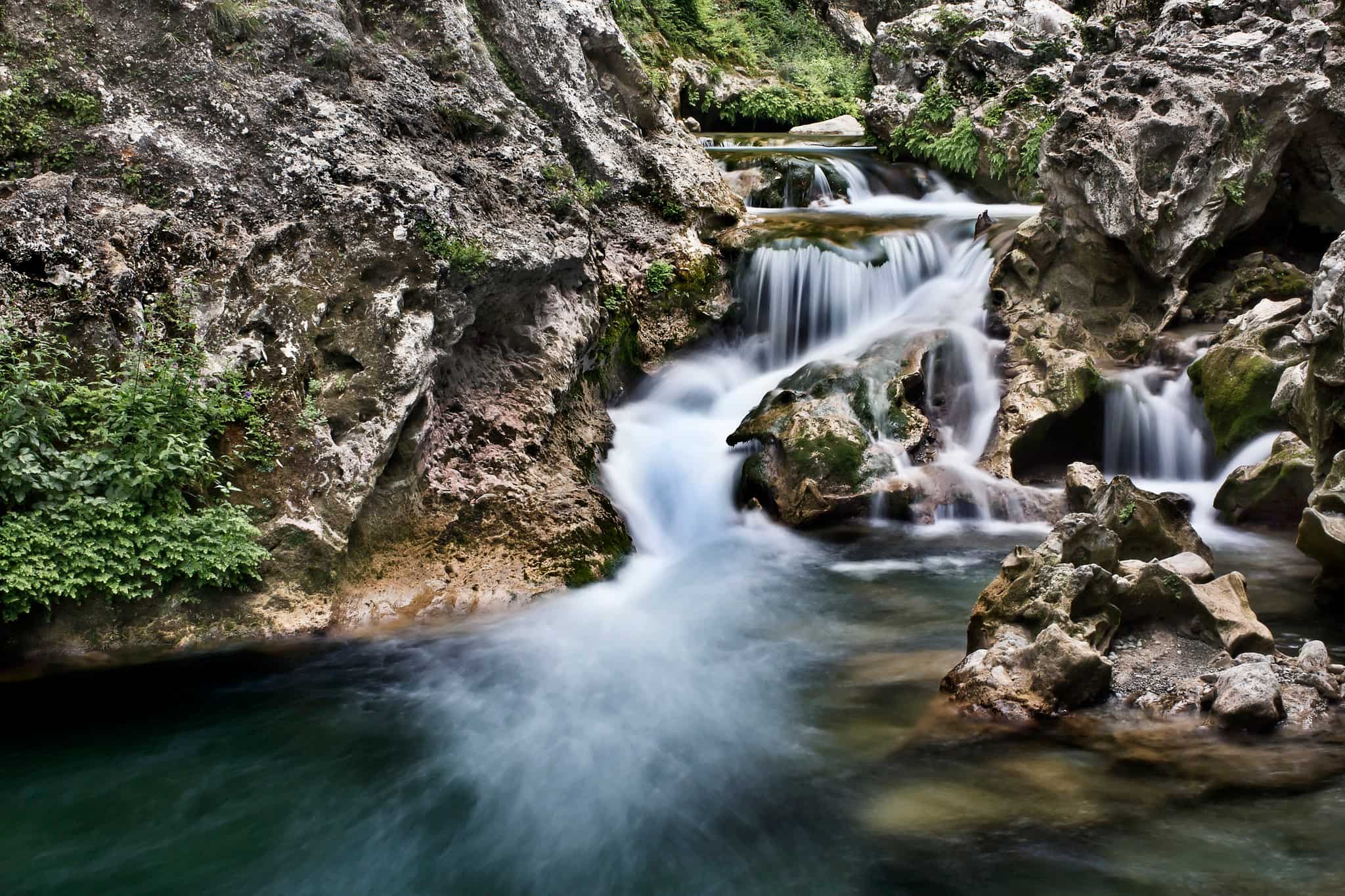
The journey to the Rif waterfalls of Akchour begins with a winding hike of 1.5 to 2 hours along a murmuring river. The accessible and popular trail reveals a series of waterfalls, the most famous of which plunges about 20 meters between green, mossy walls. Every step on this path is accompanied by the scent of wild mint and wet stone, while the sun filters through the tree leaves like golden dust on the skin. Along the route, you’ll find small Berber tea houses, perfect for a break, and numerous natural pools of turquoise, crystal-clear, and tantalizingly cold water, inviting a refreshing dip. It is in these waters, leaving a metallic and pure taste on the lips, where Akchour’s synesthesia becomes palpable.
But the magic of Akchour does not end with its waterfalls. Just a 2 to 3-hour walk (round trip) from the same park entrance, stands the imposing God’s Bridge Morocco (Pont de Dieu). This monumental natural formation is a gigantic rock arch, about 25-30 meters high, connecting two cliffs over the Farda River. It is a geological masterpiece carved by millennia of water erosion, and its majesty has fueled countless local legends, making it a sacred place for many rural Berber communities. Under God’s Bridge, the echo of the current forms a deep chant, as if the stone had a voice, and light dances in flashes of amber and sapphire. The constant coolness and the air thick with humidity and mystery command profound respect and contemplation.
Both trails, though distinct, offer an unforgettable Morocco hiking experience. For those seeking off-the-beaten-path routes, the real reward comes from veering slightly, discovering those secret pools and small nooks that mass tourism overlooks, turning the trip into a truly insightful Chefchaouen excursions. It is in these moments of solitude, surrounded by the immensity of Talassemtane National Park, that one finds that longed-for space for nature meditation.
For exploration, it is essential to wear hiking shoes or at least good traction footwear, plenty of water, and some light food, although local stalls can be found at the start of the trail. Spring and autumn months are ideal when the landscape is lush and temperatures are mild, avoiding the intense summer heat. It is crucial to remember that this is a protected area, so no waste should be left behind, nor should the fragile environment be disturbed.
Akchour and God’s Bridge are not only a delight for the senses but also evoke a profound mystical and contemplative dimension. The waterfalls of Akchour, with their constant flow, speak of purification and renewal. God’s Bridge, with its stony majesty, is perceived as a threshold between worlds: a meeting point between the sacred and the telluric. Visiting both is to live an experience that unites body, mind, and landscape, leaving you with a sense of peace and a deep connection with the wild beauty of the Moroccan Rif.